
A guide for owners, buyers, and financiers, by MacReal International
When a Malaysian bank requests a vessel valuation report before approving a marine mortgage, or when a shipowner needs certified documentation for a sale-and-purchase transaction, the quality of that report determines whether the deal moves forward or stalls at the credit committee. A well-structured report answers every question a financier or buyer is likely to raise. A weak one creates doubt, triggers re-valuation requests, and delays drawdowns by weeks.
If you’re reviewing a vessel valuation report in Malaysia, whether as a relationship manager, credit officer, or a shipowner preparing for refinancing, knowing what a compliant report should contain matters as much as knowing the final figure. This article walks through every section of a professionally prepared report, explains the compliance standard behind it, and flags the vessel description fields underwriters care about most. It closes with a checklist to run through before the report leaves your desk. For broader context, read the full guide on vessel valuation in Malaysia.
The Report Sections: A Section-by-Section Walkthrough
A professionally prepared vessel valuation report in Malaysia follows the structure required by IVS 103 Reporting, the International Valuation Standards Council standard governing how valuation conclusions must be communicated. Each section has a specific purpose. Together, they provide an auditable record of the valuer’s reasoning.
Executive Summary
The executive summary presents the valuation conclusion upfront: market value as at the valuation date, the vessel identity (name, IMO number, flag), the basis of value applied, and the valuer’s signature block. It’s the first section a credit committee reads. If the summary is missing a valuation date or doesn’t state the basis of value clearly (market value versus liquidation value, for example), the report is non-compliant under IVS 103 and should be returned for correction before routing to approval.
Instructions and Scope
This section records who instructed the valuer, what the report is to be used for (marine mortgage, sale, insurance, litigation), and any limitations on scope. For bank financing in Malaysia, the purpose statement should match the bank’s internal credit memo. A report instructed for “general advisory purposes” isn’t the same instrument as one instructed specifically for a marine mortgage facility under a named lending bank. Credit officers should verify that the scope section aligns with their facility letter before accepting the report.
Vessel Description
The vessel description is the factual backbone of the report. It must contain enough detail for any reader to independently verify the vessel’s identity and physical condition. The key fields are covered in the dedicated section below.
Classification Status
Classification society certificates confirm the vessel is maintained to the standards required by its class. For Malaysian-registered or Malaysian-operated tonnage, the most common societies are Nippon Kaiji Kyokai, American Bureau of Shipping, Lloyd’s Register, Det Norske Veritas, and Bureau Veritas. The report should state the current class notation, confirm class is maintained without conditions or recommendations outstanding, and record the next survey due dates for annual, intermediate, and special surveys. A vessel with an overdue survey or an open recommendation isn’t in class. Its marketability, and therefore its market value, is materially impaired.
Market Analysis
The market analysis section places the vessel’s value within current sale-and-purchase market conditions. It draws on transaction data from recognised S&P data providers such as Clarksons Research, VesselsValue, or Allied Shipbroking, and links vessel-specific conditions to broader freight market trends that affect buyer appetite and pricing benchmarks.
Methodology
The methodology section explains which valuation approach the valuer applied and why. Three recognised approaches exist under IVS 102 Investigations and Compliance: the market approach, the cost approach (depreciated replacement cost, commonly used for specialised or newly built vessels), and the income approach (applicable for vessels on long-term time charters where contracted cash flows drive the value). The report must state which approach was used as the primary method and explain the rationale for any approaches considered but set aside.
Comparable Transactions
Within the market approach, the valuer presents a table of recent sale-and-purchase transactions for comparable vessels. Comparable means similar vessel type, size range, age bracket, and flag or classification. The table should show: vessel name, year built, deadweight or gross tonnage, sale price, and transaction date. Transactions older than 18 months carry significantly less weight in a volatile freight market. Valuers should note if the comparable set is limited by thin S&P activity in a particular segment.
Valuation Conclusion
The conclusion states the market value figure, the currency (RM or USD; state both if the vessel is denominated in foreign currency), the valuation date, and the basis of value. The figure should be a point estimate, not a range, unless the instructions specifically request a range. A conclusion that gives “USD 4.0 million to USD 5.5 million” without a point estimate is difficult for a bank to use as a loan collateral basis and will likely require clarification.
Assumptions and Limitations
Every vessel valuation report includes a section on the assumptions the valuer relied on and the limitations of the exercise. Standard assumptions include: that information provided by the owner or operator is accurate, that the vessel is in the condition described, and that no undisclosed encumbrances or environmental liabilities exist. Limitations typically cover the fact that the valuer didn’t conduct a physical inspection (for desktop valuations) or didn’t inspect underwater portions of the hull. Banks should note whether a physical inspection was conducted, since a desktop valuation carries a larger margin of uncertainty.
Certifications
The certifications section contains the valuer’s declaration of independence, confirmation of qualifications, and the professional body under which they practise. For Malaysian engagements, valuers may reference membership with the Royal Institution of Surveyors Malaysia (RISM) or an internationally recognised designation. IVS 103 requires the valuer to disclose any conflicts of interest and confirm the report was prepared in compliance with IVS.
IVS 103 Reporting Compliance Checklist
Before accepting a vessel valuation report for credit or transactional purposes, run through this compliance check against IVS 103 Reporting requirements:
– Valuation date stated explicitly (not “as at today” or “as at the date of inspection”)
– Basis of value defined (market value, fair value, liquidation value, or other)
– Identity of the client and any third-party reliance parties named
– Scope of work described, including any limitations on inspection or data access
– Vessel identity cross-referenced to IMO number (not vessel name alone, as names change)
– Classification status confirmed with certificate dates
– Comparable transactions table with source cited (Clarksons, VesselsValue, Allied Shipbroking)
– Methodology explained with justification for approach selection
– Assumptions and limiting conditions listed explicitly
– Valuer qualification and independence declaration signed
– Report date distinguished from valuation date (these are often different)
A report that’s missing any of these elements is incomplete under IVS 103 and shouldn’t be accepted as a final valuation instrument.
Vessel Description: The Detail That Underwrites the Number
The vessel description section carries more weight than its page count suggests. For a banker reviewing a marine mortgage application, these fields tie the valuation figure to a specific, identifiable asset. Every field below should appear in the report. If any are absent, ask for a supplementary data sheet from the valuer before proceeding.
IMO Number: Permanent global identifier; doesn’t change with flag or name.
Vessel Name: Current registered name at valuation date.
Gross Tonnage (GT): Determines port dues, crew certification requirements, and regulatory thresholds.
Deadweight (DWT): For cargo vessels, the principal capacity measure used in comparable transactions.
Year Built: Primary driver of age depreciation in the market approach.
Builder and Shipyard: Affects resale marketability; certain yards command premiums.
Flag State: Determines regulatory regime; flag affects buyer pool.
Classification Society: NK, ABS, LR, DNV, BV; affects insurability and bank acceptance.
Last Drydock Date: Confirms maintenance cycle; overdue drydock is a material defect.
Next Survey Due: Annual, intermediate, and special survey dates.
Propulsion Type: Main engine maker, power output (kW or BHP), fuel type.
Cargo System (if applicable): Pumps, cranes, refrigeration, specialised cargo gear.
For vessels operating in Malaysian waters under the Marine Department of Malaysia (Jabatan Laut Malaysia) oversight, flag registration details and statutory certificate dates should align with the Marine Department’s records. A mismatch between the report’s flag state and the Marine Department’s certificate register is a red flag that warrants verification before you rely on the report.
Market Analysis: Reading the S&P Data Section
The market analysis section is where a skilled valuer adds interpretive value beyond a simple transaction table. A good report covers three layers:
Recent S&P transactions
The comparable transaction table is the foundation, sourced from Clarksons Research, VesselsValue, or Allied Shipbroking. For Malaysian-operated vessels such as OSVs, tugboats, and bulk carriers, the regional S&P market is thinner than global markets. Valuers should note whether comparables are regional or global and explain any adjustments for local market conditions.
Freight market overview
Vessel values and freight rates are correlated for bulk carriers, tankers, and container ships. The report should reference Baltic Dry Index levels, regional time charter rates, or spot market conditions relevant to the vessel type. For a tug-and-barge operation in Sabah or Sarawak, domestic charter rates and the infrastructure project pipeline are the relevant context.
Age curve and residual value
Vessels don’t depreciate in a straight line. The steepest decline occurs in the first five years, and scrap value sets a floor from year 20 to 25 onward depending on vessel type. The market analysis should confirm where the subject vessel sits on the age-depreciation curve relative to comparables.
Methodology: Why Approach Selection Matters
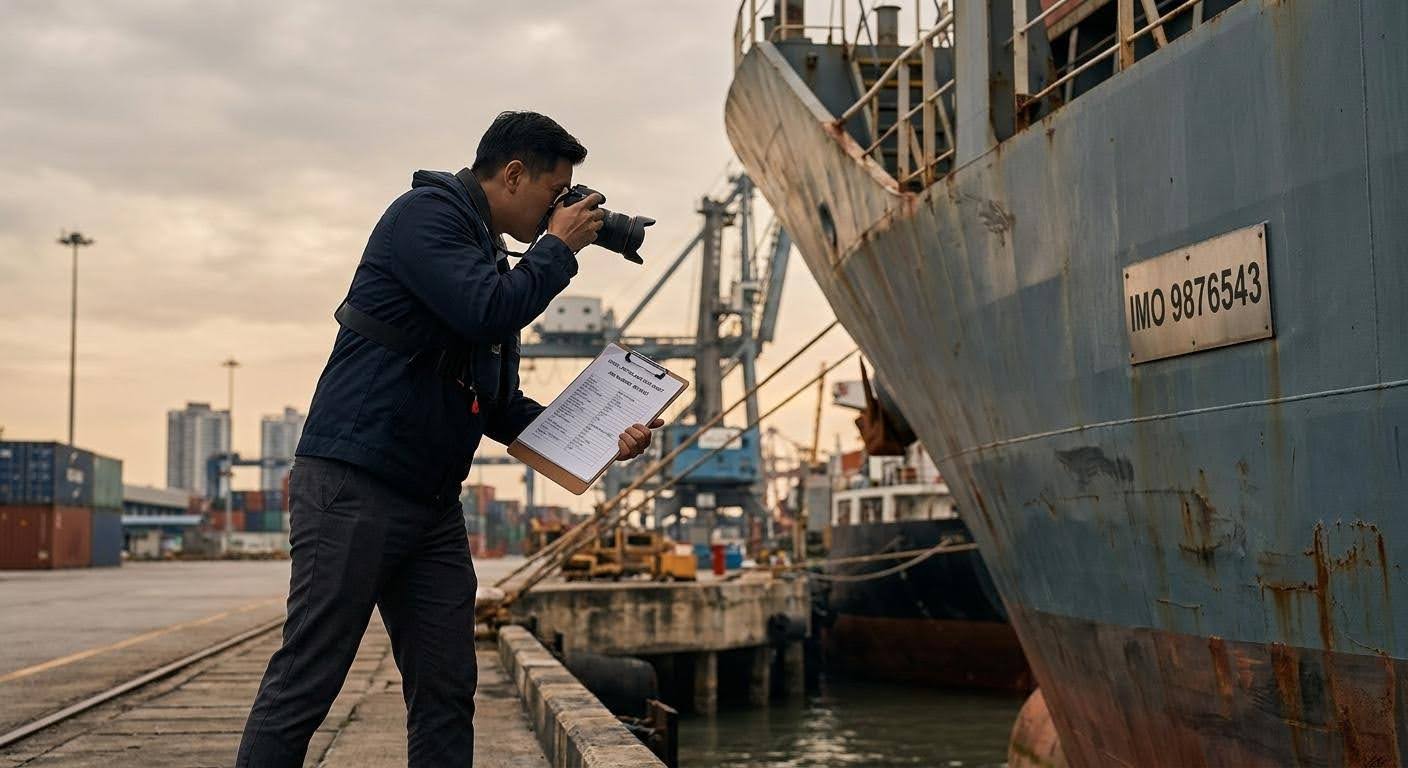
Most vessel valuation reports in Malaysia rely primarily on the market approach, since active S&P markets exist for standard vessel types and transaction data is available through Clarksons, VesselsValue, and Allied Shipbroking. That said, approach selection must be justified explicitly in the report.
Market approach
Market approach applies when sufficient comparable transactions exist. The valuer adjusts for differences in age, condition, equipment, and flag, then arrives at a market value indication. This is the standard for bulk carriers, tankers, container feeders, OSVs, and tugboats.
Depreciated replacement cost (DRC)
Depreciated replacement cost (DRC) applies where a vessel is highly specialised with no active resale market. A purpose-built dredger or floating production unit may have no meaningful comparables. DRC estimates current new-build cost, then applies physical depreciation and obsolescence deductions.
Income approach
Income approach applies where a vessel is on a long-term time charter and contracted cash flows drive the value. For a vessel with several years remaining on an above-market charter, the income approach may exceed the market approach figure, and the valuer should explain how the two are reconciled.
IVS 102 Investigations and Compliance requires the valuer to consider all three approaches and document the reasoning for any approach not applied. A report that only states “the market approach was used” without addressing why cost and income approaches were set aside is incomplete.
Assumptions and Limitations: What the Report Does Not Cover
Understanding what the report doesn’t cover is as important as reading what it does. Common limitations in Malaysian vessel valuation reports include:
No physical inspection conducted. Desktop valuations rely on owner-provided photographs, certificates, and maintenance records. The valuer can’t verify actual condition, and the report’s accuracy depends on the quality of information supplied.
Underwater portions not inspected. Even where a topside inspection was conducted, hull condition below the waterline isn’t assessed unless a drydock survey or class-approved underwater inspection was available to the valuer.
Market conditions at valuation date only. The report is a point-in-time opinion. It doesn’t project future values, and a report prepared during a freight market peak will differ materially from one prepared six months later.
Encumbrances not verified. The valuer’s opinion assumes the vessel is free of registered encumbrances. Bankers should verify with the Marine Department of Malaysia’s shipping register or the flag state registry that no prior mortgage or caveat is registered against the vessel.
Environmental and regulatory compliance assumed. The report assumes all statutory certificates are valid and no environmental enforcement actions are pending. Verification of certificate status rests with the client.
Red Flags in a Weak Report
Not all vessel valuation reports meet the standard required for bank acceptance or transaction reliance. The following patterns indicate a report that should be returned for revision or rejected outright:
No IMO number in the vessel description. Vessel names change. The IMO number is the permanent identifier. A report that relies on vessel name alone can’t be tied to a specific physical asset.
Comparable transactions older than 24 months in a volatile freight market. Stale data produces an unreliable market value indication.
No classification status confirmation. If the report doesn’t confirm that class is maintained without outstanding conditions, the financier can’t assume the vessel is insurable or mortgageable.
Valuation figure stated as a range where a point estimate is required for mortgage purposes.
No declaration of independence. The valuer must confirm no conflict of interest with the owner, buyer, or lender.
Methodology section absent or generic. A one-sentence statement such as “market approach was applied” without explanation of comparable selection or adjustments made isn’t sufficient.
Valuation date missing or ambiguous. “Recent market conditions” without a specific date is non-compliant under IVS 103.
For guidance on selecting a competent valuer who will produce a report that clears these checks, refer to the article on choosing a vessel valuer in Malaysia. For an understanding of how the report is used in a bank lending context, the article on vessel valuation for marine mortgage covers the financing process in detail.
Report Review Checklist for the Banker
Before routing a vessel valuation report to credit approval, a relationship manager or credit officer in Malaysia should confirm the following:
Identity verification
[ ] IMO number present and matches shipping register record
[ ] Flag state matches Marine Department of Malaysia or flag state registry
Compliance
[ ] IVS 103 compliant: valuation date, basis of value, scope of work, certifications present
[ ] Valuer qualification stated and independence declared
[ ] Report issued within 6 months of the intended drawdown date (or within bank-mandated validity period)
Vessel condition
[ ] Classification society confirmed, class maintained without conditions
[ ] Last drydock date within cycle (typically 2.5 to 5 years depending on vessel type and class rules)
[ ] Next survey dates stated
Methodology
[ ] Primary approach stated with justification
[ ] Comparable transactions table present with sources cited
[ ] Transaction dates within 18 months preferred; 24 months maximum
Conclusion
[ ] Valuation figure expressed as a point estimate in RM or USD (or both)
[ ] Basis of value (market value) confirmed, not liquidation or insurance value
[ ] Assumptions and limitations section read and noted for credit memo
Encumbrance
[ ] Shipping register searched for prior mortgages or caveats before reliance
A report that passes this checklist is fit for credit committee submission. One that fails on more than two points should be returned to the valuer for correction before routing.
MacReal International prepares IVS 103 compliant vessel valuation reports for banks, shipowners, and legal counsel across Malaysia. We cover all major vessel types, from offshore support vessels and tugboats to bulk carriers and tankers. Contact us to discuss your valuation requirements or to request a sample report format before commissioning a new engagement.