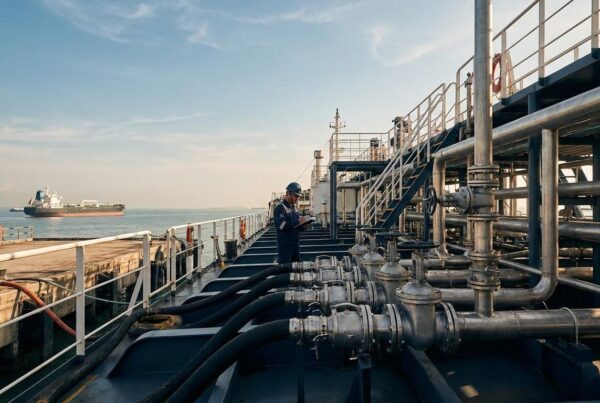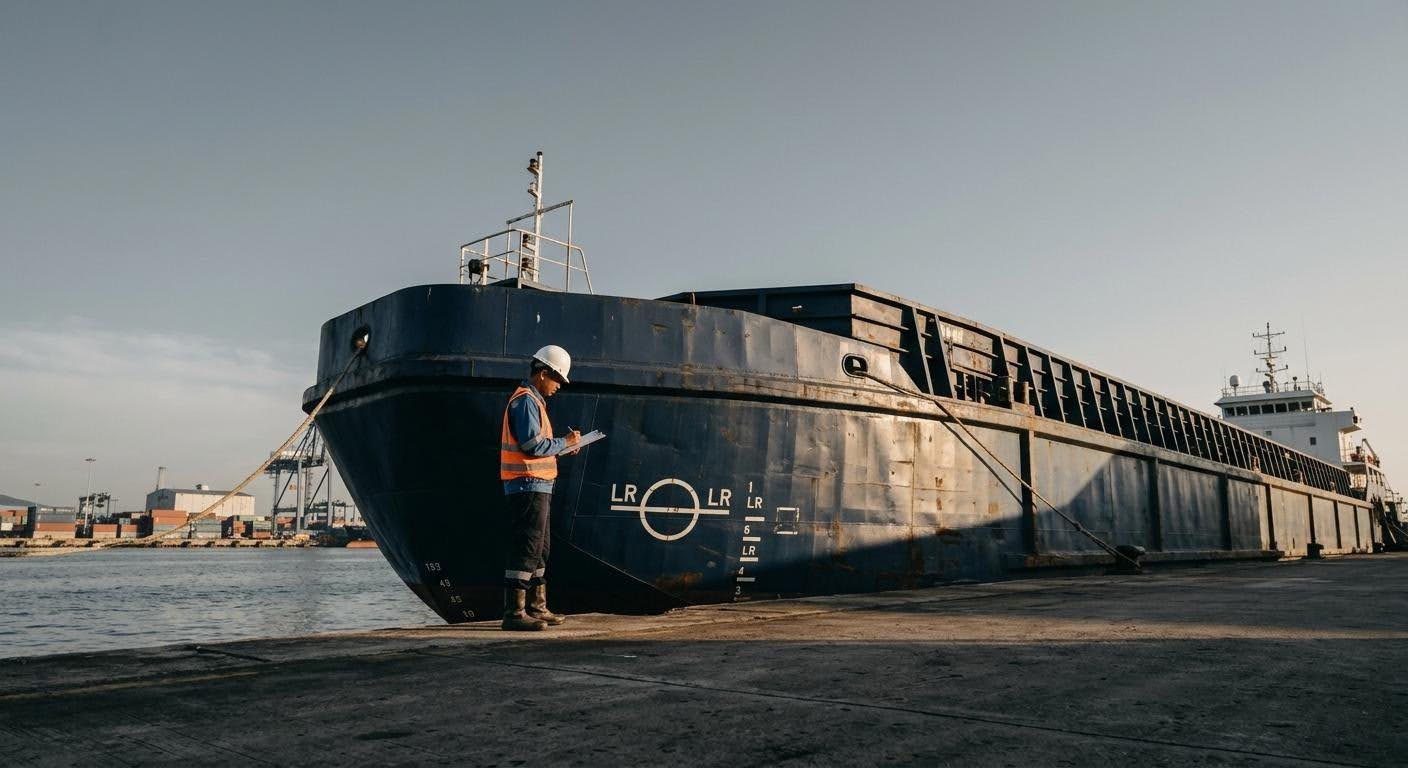
Barge valuation Malaysia is one of the more difficult corners of marine asset appraisal.
Barges are deceptively simple steel boxes, yet their value swings dramatically with steel weight, classification status, service zone, and the depth of the second-hand buyer pool at the time of valuation. A 300-foot deck barge laid up in Lumut and a similar barge actively trading aggregates in the Rajang River may carry market values that differ by RM 2 million or more, even when their measurements look almost identical on paper.
For owners, financiers, and acquirers operating across Malaysian waters, the practical question is rarely “what does the spec say it is worth.” It is “what would a willing buyer pay this quarter, given the rig count, the river contract pipeline, and the cost to bring the asset back to class.”
This article walks through how MacReal International approaches barge and workboat valuation Malaysia under IVSC International Valuation Standards (IVS), with reference to Marine Department Malaysia registration practice, Malaysian Maritime Enforcement Agency (MMEA) compliance, and the realities of the Lumut and Kemaman offshore supply chains and the Sarawak river basin trade.
The objective is to give bankers, charterers, court-appointed assessors, and corporate buyers a clear view of the variables that move the number, and where the documentation traps sit.
Barge Types and Why the Category Matters
The first task in any barge valuation Malaysia exercise is correctly identifying the asset class. Barges are not fungible. The valuation method, comparable pool, and salvage assumptions all shift by type.
Deck barges are flat-decked cargo platforms used to move project cargo, equipment, modules, and aggregates. Deck barge valuation hinges on length, breadth, depth, deadweight tonnage (DWT), deck loading capacity in tonnes per square metre, and whether the barge is rake-ended or box-ended. Box-ended barges are cheaper per tonne of steel but less efficient under tow.
Hopper barges carry bulk material such as sand, aggregates, or dredged spoil. Hopper barge valuation is sensitive to hopper volume, discharge gear (split-hull, bottom-dump, or grab-loaded), and whether the hopper is self-propelled. The Sarawak river basin trade in particular runs heavily on hopper barges feeding inland construction demand.
Accommodation barges carry crew quarters, galley, and sometimes office and recreation space for offshore field work or shipyard projects. Accommodation barge values are driven by Persons On Board (POB) capacity, DP class if any, helideck certification, and the date of last accommodation block refurbishment.
Crane barges carry a fixed or revolving crane, often pedestal-mounted, used in installation, decommissioning, salvage, and heavy lift work. Crane barge valuation is dominated by the crane itself, often more than the hull value, with safe working load (SWL), boom length, and crane class certification as the lead variables.
Pipe-lay and pipe-haul barges are specialised offshore assets, generally outside the scope of pure inland valuation work but relevant in the Lumut and Kemaman offshore yard supply chain.
Workboat valuation Malaysia covers a related but distinct group: small utility craft, line boats, mooring boats, crew transfer boats, and small landing craft. These are valued more like commercial workboats globally, with engine hours, hull condition, and engine make as primary drivers, rather than steel weight.
Steel Weight as the Primary Value Driver
For un-propelled barges, the lightship steel weight is the single most useful starting figure. Unlike tugboats or fishing vessels, a barge has limited mechanical content. The hull is the asset.
In a market with limited transaction data, valuers triangulate against the steel scrap floor and the new-build replacement cost. Light Displacement Tonnage (LDT), expressed in tonnes of steel, anchors both ends. At the floor, scrap value is roughly the prevailing ringgit-per-tonne scrap price, less towage to the demolition yard and the broker fee. At the ceiling, replacement cost is driven by current ringgit-per-tonne fabricated steel rates at Malaysian and regional yards, plus outfitting, classification, and delivery.
A second-hand barge typically trades somewhere between scrap floor and depreciated replacement cost. Where it sits depends on age, class status, and trading history.
For accommodation and crane barges, steel weight is necessary but not sufficient. The accommodation block and the crane carry their own depreciation curves. A 20-year-old crane barge with a 5-year-old replacement crane is a very different asset from one carrying its original crane.
Age, Classification, and Survey Status
Classification status is the single largest non-physical value driver in barge valuation Malaysia. A barge “in class” with a recognised IACS member society (ABS, BV, DNV, LR, NK, RINA, KR, CCS) and current Special Survey, Intermediate Survey, and Annual Survey endorsements commands a premium. A barge “out of class” or with overdue surveys can be worth a fraction of an otherwise identical sister vessel, because the buyer will price in the cost of bringing it back to class.
Bringing a 25-year-old deck barge back to class can cost RM 800,000 to RM 2 million depending on steel renewal scope, anode replacement, and survey items. That cost lands directly in the offer price.
For Malaysian-flagged barges, Marine Department Malaysia (Jabatan Laut Malaysia) registration and the Certificate of Malaysian Registry are checked alongside class. For barges trading in MMEA-patrolled waters, compliance history matters to charterers and therefore to value.
Age curves for barges are flatter than for power-driven vessels. A well-maintained deck barge can trade at 30 or even 40 years old, where a tugboat of the same age would be near retirement. The depreciation profile is more about steel renewal cycles than calendar years.
River Service vs Offshore Service Zones
A critical and often missed distinction in barge valuation Malaysia is the service zone the barge is built and certified for. Barges built for sheltered river service in Sarawak, particularly the Rajang and Baram river systems, are typically lighter scantling, lower freeboard, and not certified for unrestricted offshore towage. Their buyer pool is the inland and near-coastal trade.
Conversely, barges built for the Lumut and Kemaman offshore yard supply chain are heavier scantling, fully classed for international voyages, and command higher per-tonne values. They can also be sold into the wider regional market, Indonesia, Singapore, Vietnam, and the Middle East, which deepens the comparable pool.
A river barge Sarawak operator looking to sell into the offshore market faces a class upgrade exercise that is rarely economic. Conversely, an offshore-class barge can step down into river service but will be over-built for the trade and will struggle to recover the premium it cost.
In valuation work, the service zone determines:
- Which buyer pool is realistic
- Which class notations are required
- What the comparable transactions actually compare to
- What the salvage and re-sale floor looks like
Misclassifying service zone is one of the most common errors in informal barge valuations and a frequent source of dispute in financed transactions.
Market Approach with Limited Deal Data
IVSC IVS 105 sets out three valuation approaches: market, income, and cost. For barges, the market approach is preferred where data exists, but the Malaysian second-hand barge market is thinly traded and many transactions are private.
MacReal’s working method is to combine three layers:
- Direct Malaysian comparables where available, drawn from broker channels, court-ordered sales, and disclosed corporate transactions.
- Regional comparables from Singapore, Indonesia, and Thailand, adjusted for flag, class society, and currency. Regional sales are typically priced in USD and must be converted to RM at the valuation date.
- Depreciated replacement cost as a sanity check, derived from current Malaysian yard fabrication rates and a steel-weight-based age curve.
For crane and accommodation barges, where the comparable pool is even thinner, the cost approach often takes the lead, with the market approach used as a cross-check. The income approach (discounting expected charter cash flows) is used where the barge is on a long-term contract, but it is rarely the primary method for spot-market or laid-up assets.
Workboat valuation Malaysia leans more heavily on the market approach. The fleet is larger, transactions are more frequent, and engine hours and hull condition are reasonably standardised across the buyer pool.
Salvage and Re-Sale Value Floor
Every barge valuation Malaysia exercise should establish a defensible value floor. For financiers, this is the loan-to-value backstop. For court-appointed assessors, it is the realisable amount in a forced sale.
The floor is usually the higher of:
- Scrap value at a regional demolition yard (Bangladesh, Pakistan, India for steel-heavy assets; local Malaysian cutters for smaller workboats), net of towage and broker costs.
- Salvage re-sale to a regional trader willing to take the asset as-is, often for re-deployment in Indonesia, Vietnam, or the Mekong basin.
For modern barges with current class, the floor sits well above pure scrap. For older or out-of-class assets, scrap is often the binding constraint. The point of the floor is not to predict the sale price but to bound the downside.
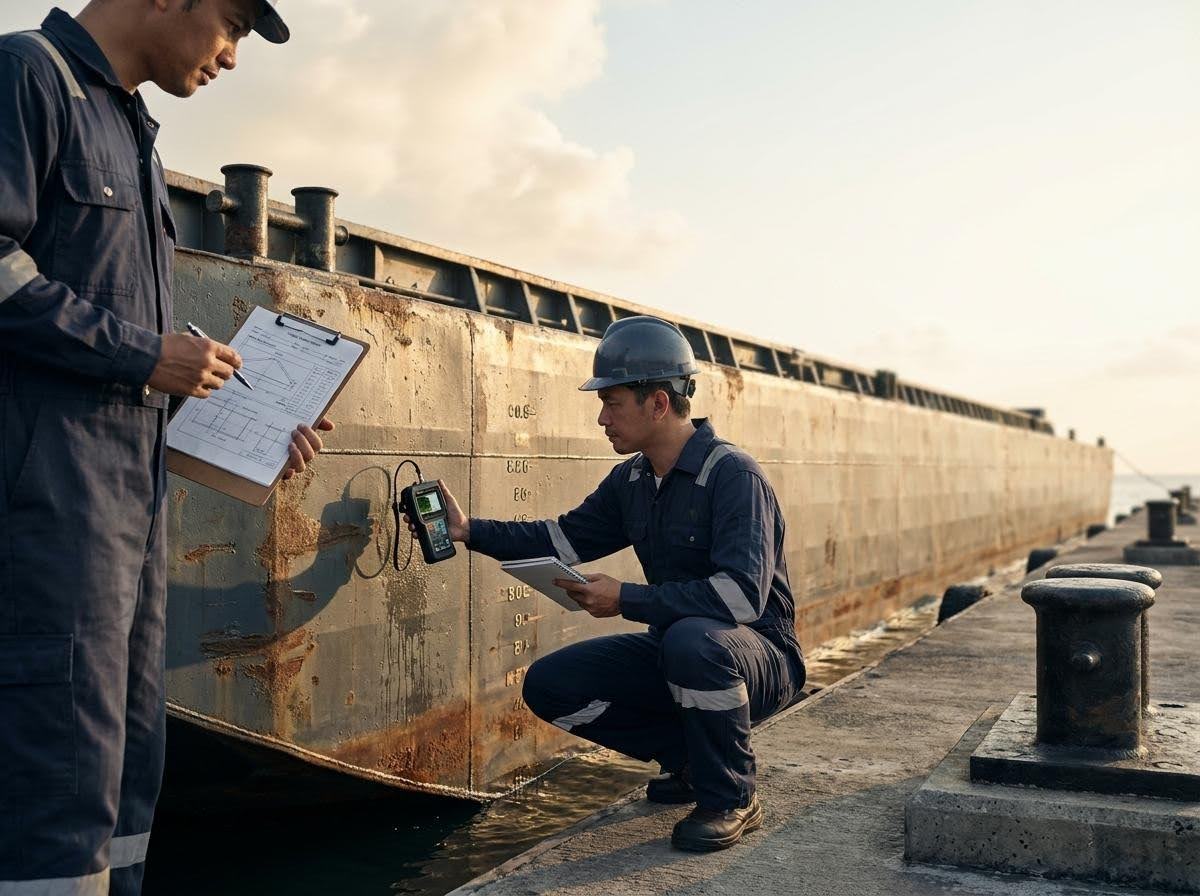
Closing: Get the Right Number Before the Deal Moves
Barge and workboat valuation in Malaysia rewards careful, evidence-led work. The differences between deck, hopper, accommodation, and crane barges are real and material. The service zone distinction between river and offshore is load-bearing. Steel weight, classification, and the depth of the buyer pool drive the number more than any single spec sheet figure.
If you are financing, acquiring, divesting, or restructuring a Malaysian barge or workboat asset, MacReal International produces IVSC-compliant valuation reports that hold up under bank, audit, and court scrutiny. We work directly with Marine Department Malaysia documentation, IACS class records, and the regional broker network that actually moves these assets.
For related guidance, see our vessel valuation Malaysia pillar guide, our coverage of tugboat valuation Malaysia, and our note on fishing vessel valuation Malaysia.
To request a barge or workboat valuation engagement, contact MacReal International with the vessel particulars, class society, last survey dates, and intended use of the report.