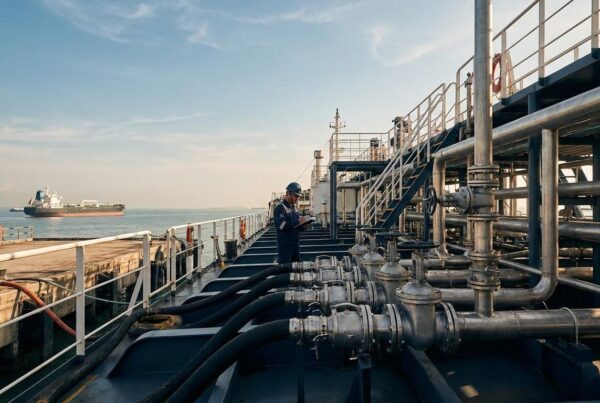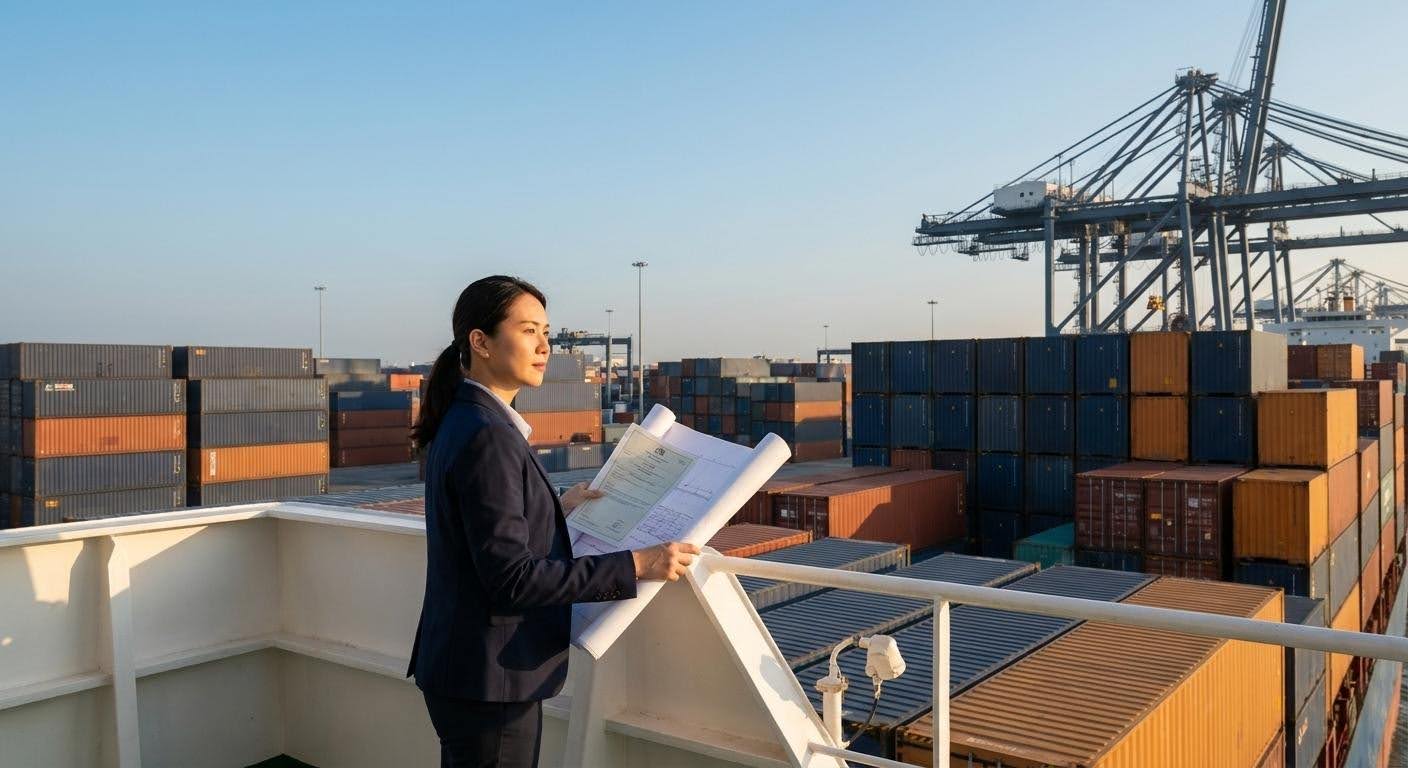
Container ship valuation Malaysia work sits at the intersection of three forces that rarely move together: global liner cycles set by the major east-west trades, intra-Asia feeder economics anchored to Westports, Northport and Port of Tanjung Pelepas (PTP), and the regulatory retrofit cost curve set by the IMO. A box ship that earns a strong charter on a Pasir Gudang to Ho Chi Minh string can carry a very different value to the same hull lifted out of the regional pool and offered for a deep-sea relay run.
For Malaysian owners, banks, charterers and corporate finance teams, the practical question is rarely “what is the global average price” but “what is this specific vessel worth, here, this quarter, given its TEU band, age, reefer plug count, and the charter index it actually trades against”. Getting that right requires a Malaysia-grounded valuation approach that respects International Valuation Standards Council (IVSC) IVS while pulling on the right local and global data inputs.
This article walks through how MacReal International values container vessels for Malaysian clients: the TEU classes we segment, the age and slot-economics curves that drive depreciation, the charter indices we triangulate against, the IMO compliance overlays that now bite at survey time, and the local trade context that decides whether a feeder is “regional surplus” or “regional scarce”.
Container Vessel Classes by TEU: Feeder, Panamax, Post-Panamax, ULCV
Container vessel valuation begins with correct class segmentation, because the comparable sales pool, charter index, and second-hand demand profile shift sharply across TEU bands.
Feeder (100 to 3,000 TEU). This is the workhorse class for Malaysian intra-Asia trade. Small feeders (100 to 1,000 TEU) and standard feeders (1,000 to 2,000 TEU) connect Westports, Northport, Penang, Bintulu and Kuantan to regional hubs. Feedermax units (2,000 to 3,000 TEU) typically run longer intra-Asia strings out of PTP. Feeder container vessel valuation in Malaysia is heavily influenced by reefer plug count, gear (geared versus gearless), and ice class (rare in this region but relevant for resale into Northeast Asia).
Panamax (3,000 to 5,100 TEU). Built to the original Panama Canal locks, panamax container valuation has compressed structurally since the 2016 canal expansion opened the trade to neo-panamax tonnage. Surviving panamax box ships now serve secondary trades and as upper-tier feeders. Resale values are sensitive to remaining useful life and the cost of compliance retrofits.
Post-panamax (5,100 to 10,000 TEU). Post-panamax container vessels are the backbone of the intra-Asia mainhaul and Asia-Middle East trades. Malaysian flag exposure here is limited but charter exposure is meaningful, particularly through MISC-linked entities and regional operators chartering tonnage into PTP transhipment.
Neo-panamax and ULCV (10,000 TEU and above). Ultra Large Container Vessels (ULCVs, typically 18,000 TEU and above) are deep-sea trade assets and rarely owned by Malaysian principals, but they call at PTP and Westports as part of east-west loops. Valuation work on this class for Malaysian clients is usually for charter mark-to-market, not ownership transfer.
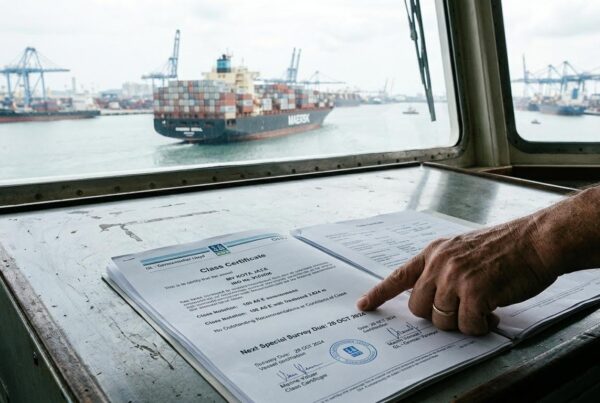
For each band, the valuer must confirm the IACS classification society (ABS, BV, ClassNK, DNV, LR, RINA), survey status, and whether the vessel has a current Statement of Compliance under MARPOL Annex VI.
Age Curves and Slot Economics
Container ships do not depreciate on a straight line. The curve is steeper in the first ten years, flattens in the middle, and then accelerates again as the vessel approaches its third special survey at age 15 and the fourth at age 20.
The economic logic sits in slot economics. A box ship earns by moving TEU-miles at a unit cost. Older tonnage carries higher fuel burn per slot, higher off-hire risk, more frequent steel renewal at survey, and an increasing compliance gap against newer eco-design vessels. When fuel is expensive or the EU Emissions Trading System (EU ETS) bites, the slot-cost gap widens and older units lose charter competitiveness, which feeds straight into market value.
For Malaysian feeder tonnage, the practical age cliff often arrives at the third special survey. A 15-year-old 1,700 TEU geared feeder with a clean class record and recent ballast water treatment system (BWTS) installation can hold value materially better than a sister vessel with deferred steel and an open ballast water deficiency. The Marine Department Malaysia and the Malaysian Maritime Enforcement Agency (MMEA) inspection record matters here, because deficiencies recorded under Tokyo MOU port state control flow through to insurance, charter acceptability, and ultimately to price.
Charter Market Cycle: Howe Robinson, ConTex, and the Asian Feeder Pool
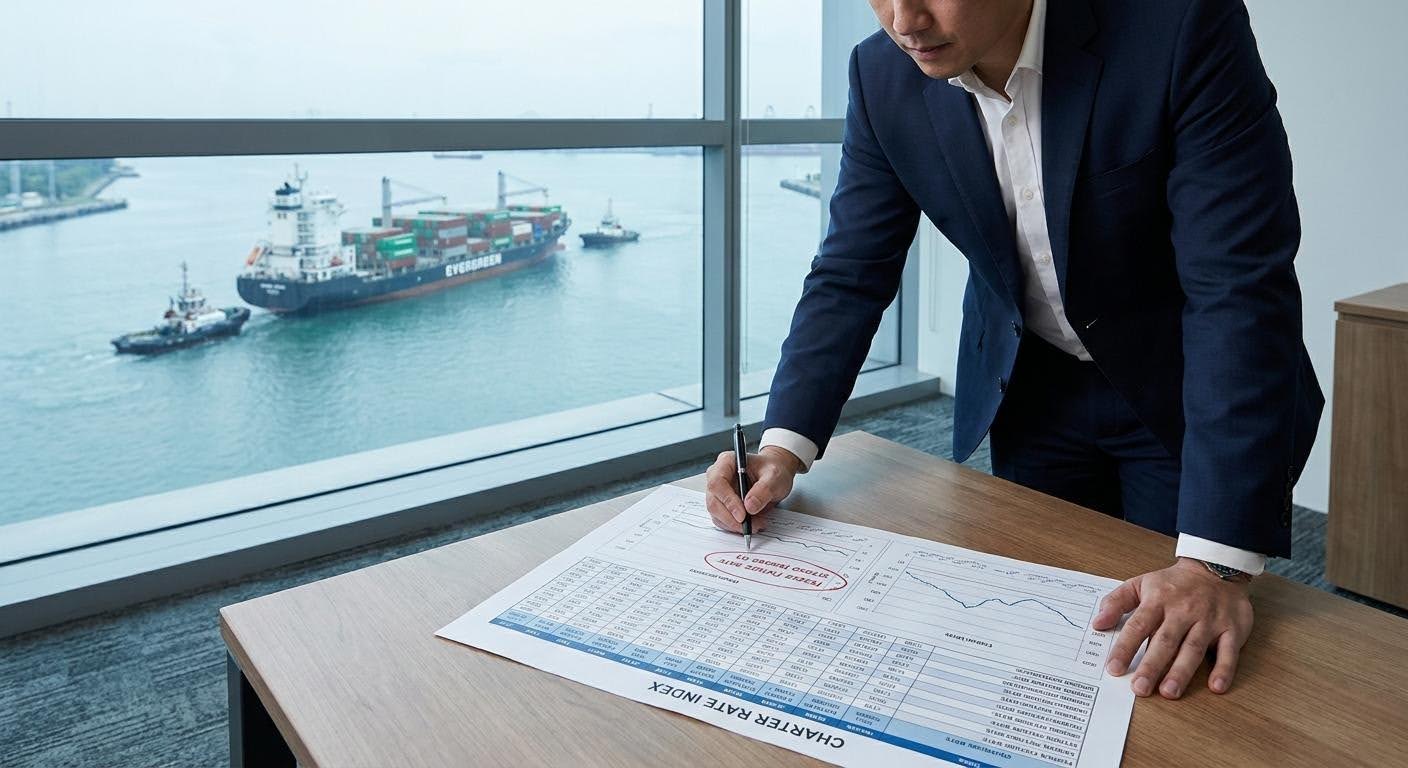
The charter market is the closest thing container shipping has to a continuous price signal. Two indices anchor most valuation work:
- Howe Robinson Container Index (HRCI): a composite charter rate index covering a basket of standard TEU sizes. The HRCI is the most widely referenced index for second-hand container values and charter mark-to-market.
- ConTex (New ConTex): a Hamburg-based time-charter rate index for 1,100, 1,700, 2,500, 2,700, 3,500 and 4,250 TEU classes, with daily quotes that map well to feeder and panamax bands.
For container ship valuation Malaysia work, MacReal triangulates HRCI and ConTex levels against the Container Throughput Index (RWI/ISL) for demand context, and against actual reported fixtures in the intra-Asia pool. A 1,700 TEU feeder fixed for 12 months at a rate well above the ConTex 1,700 benchmark signals scarcity and supports a market value at the upper end of the comparable sales range.
The cycle matters as much as the level. A vessel valued at the bottom of a charter trough, with a charter-attached structure and a counterparty of investment grade, can carry a value materially above the bare-hull benchmark because the income stream is ringfenced. Conversely, a vessel coming open into a soft market trades at a discount to the index-implied value.
IMO Compliance and Retrofit Overlays
The compliance stack has thickened. For container vessel valuation in Malaysia, four overlays now sit on top of the base hull-and-machinery value:
MARPOL Annex VI and IMO 2020 sulphur cap. Vessels burning compliant fuel oil, fitted with scrubbers, or running on alternative fuels each have a different operating cost profile. A scrubber-fitted post-panamax can carry a meaningful premium when the high-sulphur to very-low-sulphur fuel oil spread is wide.
Energy Efficiency Existing Ship Index (EEXI) and Carbon Intensity Indicator (CII). EEXI is a one-off technical rating; CII is an annual operational rating from A to E. A vessel rated D for three consecutive years or E in a single year requires a corrective action plan. CII ratings now feed directly into charter acceptability, which feeds into value.
Ballast Water Management Convention. BWTS retrofit status is a binary value gate. A pre-retrofit vessel approaching survey carries a known capex liability that the valuer must net off.
EU ETS and FuelEU Maritime. Vessels calling EU ports carry EU Allowance (EUA) liabilities and FuelEU greenhouse gas intensity targets. For Malaysian feeder tonnage that never trades to Europe, this overlay is largely theoretical, but for any vessel with optionality on east-west deployment, it is real.
Intra-Asia Feeder Demand: Westports, Northport and PTP
Malaysia’s container trade context sets the demand floor for feeder tonnage values. Three port complexes drive the picture:
Westports (Port Klang). The largest single container terminal operator on the west coast, Westports is the primary transhipment node for intra-Asia feeders connecting Bay of Bengal, Indochina and northeast Asia strings to mainline services. Feeder slot demand at Westports is a leading indicator for 1,000 to 2,500 TEU charter rates in the region.
Northport (Port Klang). Operated separately, Northport handles a complementary mix of mainline calls, intra-Asia feeders and conventional cargo. The Westports and Northport complex together set the Klang gateway demand profile.
Port of Tanjung Pelepas (PTP). Southern Johor’s deep-water hub is the primary east-west transhipment alternative to Singapore for several alliances. PTP transhipment volumes drive demand for feedermax and panamax tonnage on regional relay services.
MISC Berhad, Malaysia’s flag carrier, has historically been more weighted to LNG and tanker tonnage than to box ships, but MISC container exposure (directly and through associates) and the broader Malaysian-controlled feeder fleet operate against this port demand backdrop. When Westports throughput and PTP transhipment both run hot, the regional feeder pool tightens and feeder values lift faster than the global HRCI implies.
Market Approach Data Sources for Malaysian Container Valuations
Under IVS, the market approach requires verifiable, comparable transaction evidence. For container vessel valuation Malaysia work, the data stack typically includes:
- VesselsValue, Clarksons SIN, Braemar, Howe Robinson for second-hand transaction reports and depreciated replacement cost benchmarks.
- HRCI and ConTex for charter rate evidence by TEU band.
- Container Throughput Index (RWI/ISL) for demand context.
- Marine Department Malaysia registry data for Malaysian flag fleet composition and changes.
- Westports and Northport quarterly throughput disclosures and PTP operational updates for transhipment context.
- MMEA and Tokyo MOU port state control records for deficiency history on the subject vessel.
- IACS class records (ABS, BV, ClassNK, DNV, LR, RINA) for survey status, condition assessment program (CAP) ratings where available, and outstanding recommendations.
For a Malaysian client, all values are reported in Ringgit Malaysia (RM) with the USD reference rate disclosed, the valuation date fixed, and the currency assumption stated. Cross-border transactions are typically priced in USD globally, but the deliverable for a Malaysian bank or corporate must reconcile to RM at a stated rate.
Malaysia’s Container Trade Context
The Malaysian container trade has three structural features that shape valuation work. First, the country is a transhipment economy as much as a gateway economy: a meaningful share of TEU lifted at PTP and Westports never enters Malaysia. Second, the intra-Asia feeder pool is the binding constraint for most Malaysian-owned tonnage, which means regional demand swings dominate global cycle effects for this client base. Third, the regulatory environment, set by the Marine Department Malaysia and reinforced by MMEA at sea, is increasingly aligned with IMO timelines, which pulls compliance capex forward for the local fleet.
These features mean that a defensible container ship valuation Malaysia exercise cannot rely on global HRCI levels alone. It must layer in the intra-Asia feeder pool dynamic, the Westports-Northport-PTP throughput context, and the IMO retrofit overlay applied to the specific vessel.
How MacReal Approaches Container Vessel Valuation
MacReal International conducts container vessel valuations for Malaysian banks, owners, charterers and corporate finance teams under IVSC IVS, with the market approach as the primary basis and the income approach as the cross-check. We segment by TEU class, calibrate against HRCI and ConTex, layer in the IMO overlay, and ground the demand context in Westports, Northport and PTP throughput data. Outputs are reported in RM with full assumption disclosure, valuation date, and methodology trail.
For related vessel classes, see our pillar page on vessel valuation in Malaysia, our note on bulk carrier valuation, and our companion piece on tanker valuation.
If you are evaluating a feeder, panamax or post-panamax acquisition, financing a fleet refresh, or marking a charter book to market, contact MacReal International for a scoped valuation proposal.