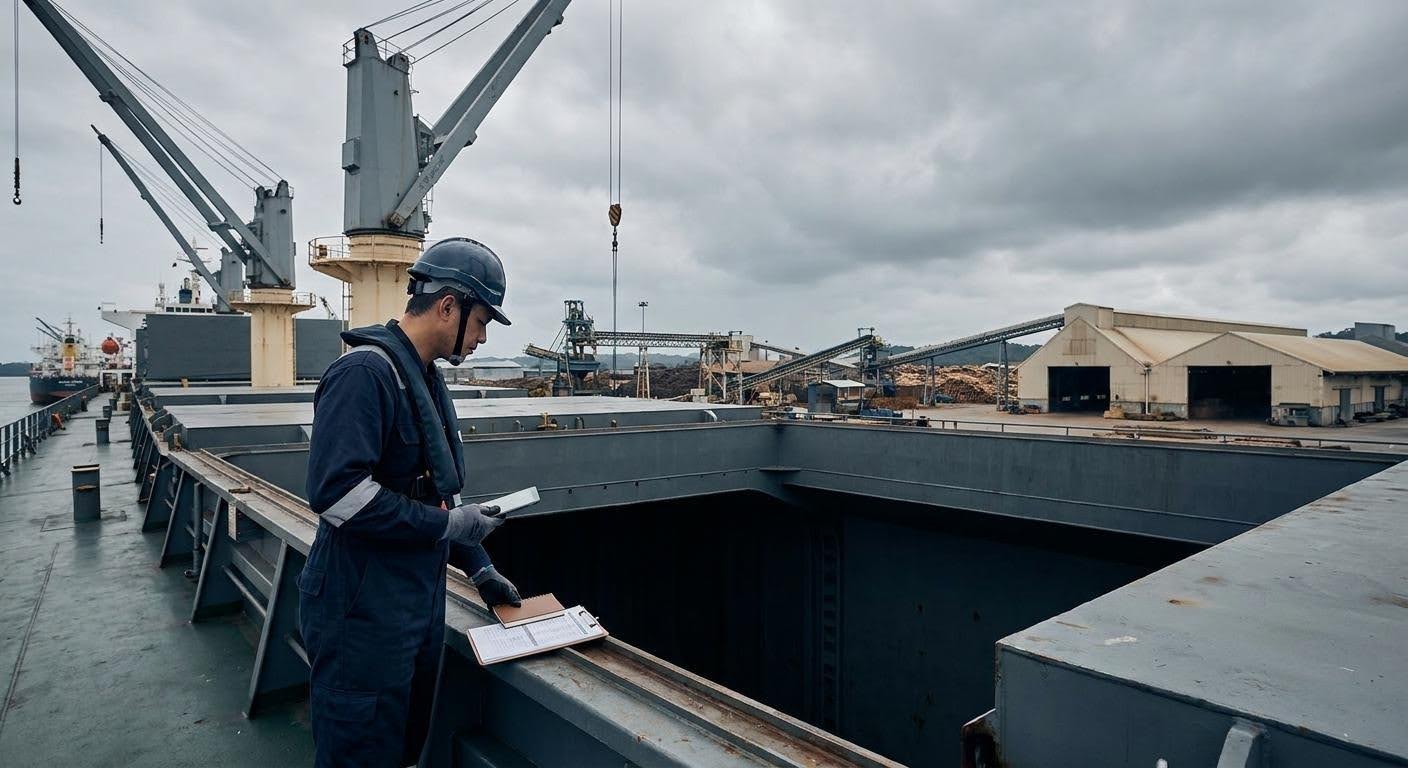
Bulk carrier valuation in Malaysia sits at the intersection of three forces that move at different speeds. The Baltic Dry Index (BDI) shifts daily, sometimes violently. Vessel age and special survey status shift on a calendar that every owner can read five years out. And the regional dry bulk trade between Port Klang, Bintulu, Kemaman, Pasir Gudang, and the wider South China Sea moves with the rhythm of palm kernel shell exports, cement clinker imports, iron ore transshipment, and coal flows into Peninsular Malaysia’s power stations.
Getting a defensible valuation on a handysize, supramax, panamax, or capesize requires more than a desktop comparable lookup. It requires reading the BDI cycle position, understanding whether the vessel’s gear configuration matches its likely trade route, and stress testing the residual value against scrap steel prices delivered into Alang or Chittagong.
This guide walks through how MacReal International approaches bulk carrier valuation under the IVSC International Valuation Standards (IVS), with Malaysian regulatory context from the Marine Department Malaysia (Jabatan Laut), the Malaysian Maritime Enforcement Agency (MMEA), and IACS classification society practice. For the foundational methodology that underpins all our vessel work, see our vessel valuation Malaysia pillar.
Bulk Carrier Classes by DWT: Why the Segment Matters Before the Vessel
Bulk carrier valuation begins with segment classification by deadweight tonnage (DWT), because each segment trades on a different demand curve, attracts a different lender pool, and carries a different scrapping economics profile.
Handysize (10,000 to 39,999 DWT): The workhorse of intra-Asian dry bulk. Almost always geared. Trades minor bulks, palm kernel shell, fertilisers, cement, steel products, logs, and bagged cargo. A Malaysian-flagged handysize calling Bintulu or Sandakan typically trades within a 2,500 nautical mile radius. Handysize valuation is most sensitive to gear condition and tween-deck flexibility.
Handymax and Supramax (40,000 to 64,999 DWT): The fastest-growing segment over the past two decades. Geared, four to five cranes typically rated 30 to 36 tonnes. Supramax valuation in Malaysia hinges on whether the vessel is a modern Ultramax (62,000 to 65,000 DWT, eco-engine, fuel efficient) or an older Supramax design with higher bunker consumption. The fuel curve matters more than headline DWT.
Panamax and Kamsarmax (65,000 to 99,999 DWT): Gearless, sized to transit the old Panama Canal locks (now overshadowed by Neopanamax). Trade coal, grain, and iron ore on longer routes. Panamax valuation tracks the BDI Panamax sub-index closely, and Malaysian buyers typically deploy these on Indonesia-China coal runs or Australia-China grain.
Capesize (100,000+ DWT): Gearless, too large for the Panama Canal, route Cape of Good Hope or Cape Horn. Iron ore and coal majors. Capesize valuation is the most volatile of all dry bulk segments because the orderbook, scrapping rate, and Chinese steel demand swing the spot rate from sub-USD 5,000 per day to north of USD 80,000 per day within a single year.
A valuer who treats all four segments with the same comparable methodology will produce a number that satisfies neither a lender’s collateral committee nor an auditor reviewing fair value under MFRS 13.
BDI Cycle Position Adjustment: Reading the Tape Before You Quote
The Baltic Dry Index is not a price. It is a freight rate index, calculated daily by the Baltic Exchange in London, blending the Capesize, Panamax, Supramax, and Handysize sub-indices. But asset values track the BDI with a lag and a multiplier, and a competent valuer reads where the cycle is sitting before producing a number.
Three cycle markers we look at:
- Twelve-month rolling average versus spot: If the spot BDI is more than 30 percent above the twelve-month average, second-hand asset values are typically running ahead of the long-term sustainable level. We discount accordingly.
- Forward freight agreements (FFA) curve shape: A steeply backwardated FFA curve signals the market expects rates to fall. We do not lift recent comparable sale prices into a falling-rate environment without a haircut.
- Newbuilding parity check: If second-hand five-year-old prices exceed 80 percent of newbuilding prices, the market is overheated. The 2021 to 2022 dry bulk peak saw five-year-old supramax prices briefly cross 95 percent of newbuilding parity, which never holds.
For Malaysian valuation reports, we explicitly state the BDI level on valuation date and the trailing 90-day and 365-day averages. Lenders auditing the report under Bank Negara Malaysia capital adequacy frameworks expect this transparency.
Gear Configuration and Trade Route Fit
Whether a bulk carrier is geared (cranes onboard) or gearless drives a significant valuation differential, and the differential changes by segment.
Geared advantage: A geared handysize or supramax can call ports without shore cranes, including many Malaysian secondary ports, Indonesian outports, and Philippine archipelago berths. This is real economic value because it expands the addressable trade lanes.
Gearless advantage: Lower lightship weight, lower maintenance, simpler operation. Panamax and capesize vessels almost universally trade gearless because they call major loading and discharging terminals with shore equipment.
For a Malaysian-deployed supramax trading palm kernel shell out of Bintulu or Sandakan, geared configuration is essentially mandatory. For the same supramax trading coal Indonesia to South China, gearless would not be a dealbreaker. Trade route fit determines whether the gear premium is recoverable in the charter market.
We adjust comparable sales for gear configuration by isolating geared and gearless transactions in the same DWT band over the previous 18 months and computing the implied premium or discount.
Age and Special Survey Status: The Five-Year Cliff
Bulk carriers go through five-yearly special surveys (SS) under IACS classification rules. Around the third special survey (year 15) and especially the fourth (year 20), the cost of class renewal rises sharply, and the market discount on the vessel widens to reflect this.
Modern (0 to 5 years): Trades close to newbuilding prices. The five-year-old market is the most liquid and most quoted benchmark.
Mid-life (5 to 15 years): The bulk of the trading fleet. Valuation premium goes to vessels with clean class records, no detentions, and good charter pedigree.
Aging (15 to 20 years): Steep value decline. Buyers price in upcoming SS costs of USD 1.5 to 3.5 million depending on segment. Ballast water management system (BWMS) compliance and any retrofitted scrubbers become valuation factors.
Pre-scrap (20+ years): Vessels in this band trade at a premium to scrap steel value plus residual trading earnings to next SS. Buyers run a sharp pencil on whether one more SS is economic.
A valuer who ignores the SS calendar produces a number that misses the largest single non-market driver of bulk carrier value. We always note the next SS due date and intermediate survey (IS) status in the valuation report, because this is what serious buyers underwrite.
For lenders financing dry bulk vessels, the SS schedule must align with the loan amortisation schedule. We frequently see Malaysian banks structure facilities to mature six months before the next SS, so that refinancing decisions are made with current market data rather than legacy assumptions.

Market Approach with Clarksons and VesselsValue Benchmarks
Under IVSC IVS 105, the market approach is the primary methodology for second-hand bulk carrier valuation, supported by the cost approach (depreciated replacement cost from newbuilding parity) and an income approach (discounted cash flow from charter earnings projection) where appropriate.
For market approach inputs, we triangulate across:
- Clarksons Shipping Intelligence Network (SIN) weekly second-hand prices by age band and DWT segment.
- VesselsValue algorithmic valuations and recent sale comparables.
- Direct broker reports from Simpson Spence Young, Howe Robinson, Maersk Broker, and regional Singapore-based S&P houses for South East Asian deployment specifics.
- Reported sales from TradeWinds, Lloyd’s List, and Splash 247 confirmed against multiple sources.
We never rely on a single source. The IVSC standards require the valuer to assess the reliability of each input, and a Clarksons standard handysize benchmark for a 32,000 DWT vessel does not necessarily reflect a Malaysian-flagged geared cement carrier with tween decks.
For Malaysian-flagged tonnage, we apply a flag adjustment where the Malaysian International Ship Registry (MISR) at Labuan offers tax efficiency that some buyers value, while domestic Malaysian Ship Registry (MSR) tonnage carries cabotage protection under the Domestic Shipping Licence Board (DSLB) regime. These flag premiums or discounts can move a number by 3 to 8 percent.
For tanker-specific methodology that runs on a parallel track, see our tanker valuation Malaysia guide. For the unique container market dynamics, our container ship valuation Malaysia article covers the box trade specifics.
Malaysian Cement and Clinker Carrier Context
Malaysia’s cement and clinker trade adds a niche dry bulk segment that mainstream BDI benchmarks do not capture cleanly. Cement carrier Malaysia operations centre on:
- Pasir Gudang and Westports for clinker imports from Vietnam, Indonesia, and Thailand feeding domestic grinding stations.
- Kemaman and Kuantan for bagged cement and clinker movements along the East Coast.
- Specialised pneumatic cement carriers for inter-island Malaysian and Indonesian deliveries.
Cement carriers carry pneumatic discharge systems that add 10 to 15 percent to newbuilding cost over a comparable bulker. They also carry a thinner second-hand market because the buyer pool is narrower. Valuation requires:
- Newbuilding parity from specialist Asian yards (Imabari, Tsuneishi, and select Chinese yards).
- Discount for niche resale market depth.
- Premium for active long-term contracts of affreightment (COAs) with cement majors such as YTL Cement, Lafarge Malaysia, or Hume Cement.
A cement carrier with a five-year COA at firm rates is a different asset to a tramp-trading sister vessel. The income approach gains weight for cement carriers because the cash flow visibility supports a defensible DCF.
Marine Department Malaysia survey records and DSLB licence status are the first documents we request when valuing a Malaysian cement carrier. MMEA enforcement records on any vessel detentions or incidents within Malaysian waters are equally part of due diligence.
Scrapping Value Floor and Recycling Compliance
Every bulk carrier valuation has a floor: the scrap steel value, less towage to the recycling yard, less broker commissions, less any environmental remediation cost. This floor is calculated on lightship displacement (the empty steel weight of the vessel) and the prevailing USD per LDT (light displacement tonne) price at the dominant recycling destinations.
Current dominant scrapping markets:
- Alang, India: Largest by volume, USD per LDT pricing reported weekly.
- Chittagong, Bangladesh: Higher prices historically, tighter regulatory oversight post-2025.
- Gadani, Pakistan: Lower compliance bar, lower prices.
- Aliaga, Turkey: Premium pricing for Hong Kong Convention compliant recycling.
The Hong Kong International Convention for the Safe and Environmentally Sound Recycling of Ships entered into force in June 2025, and Malaysian-flagged tonnage destined for recycling now requires an Inventory of Hazardous Materials (IHM) and a recycling at a compliant facility. This compliance overhead has shifted scrap economics, and we factor it into the floor calculation.
A 25-year-old supramax with 11,500 LDT scrapping at USD 480 per LDT delivered Alang yields a gross scrap value before towage, fuel, and broker commission. We model the net scrap proceeds and use it as the absolute valuation floor in the report. Below this number, the owner is better off recycling than continuing to trade.
For Malaysian owners running aging tonnage, the scrap floor also informs fleet renewal decisions. When the spread between continued trading earnings (after SS cost) and scrap proceeds narrows, the recycling decision becomes the rational economic choice.

Closing: Get a Defensible Bulk Carrier Valuation Before the Cycle Turns
Bulk carrier valuation is cyclical, segment-specific, and survey-sensitive. A number that was right six months ago may be 20 percent off today. A handysize valuation methodology does not transfer cleanly to a capesize. And a Malaysian cement carrier with a long-term COA trades on different fundamentals to a tramping supramax.
MacReal International produces IVSC IVS-compliant bulk carrier valuations for Malaysian banks, shipowners, auditors, and corporate buyers, with full BDI cycle context, segment-specific comparables, and SS schedule integration. We work across the full DWT spectrum from coastal handysize to ocean-going capesize, and across the niche Malaysian cement carrier and clinker trades.
If you need a bulk carrier valuation for collateral, financial reporting, sale and purchase, or insurance, get in touch. We will scope the work, confirm the methodology, and deliver a defensible report on a timeline that fits your transaction or audit cycle.
Contact MacReal International for a bulk carrier valuation quote