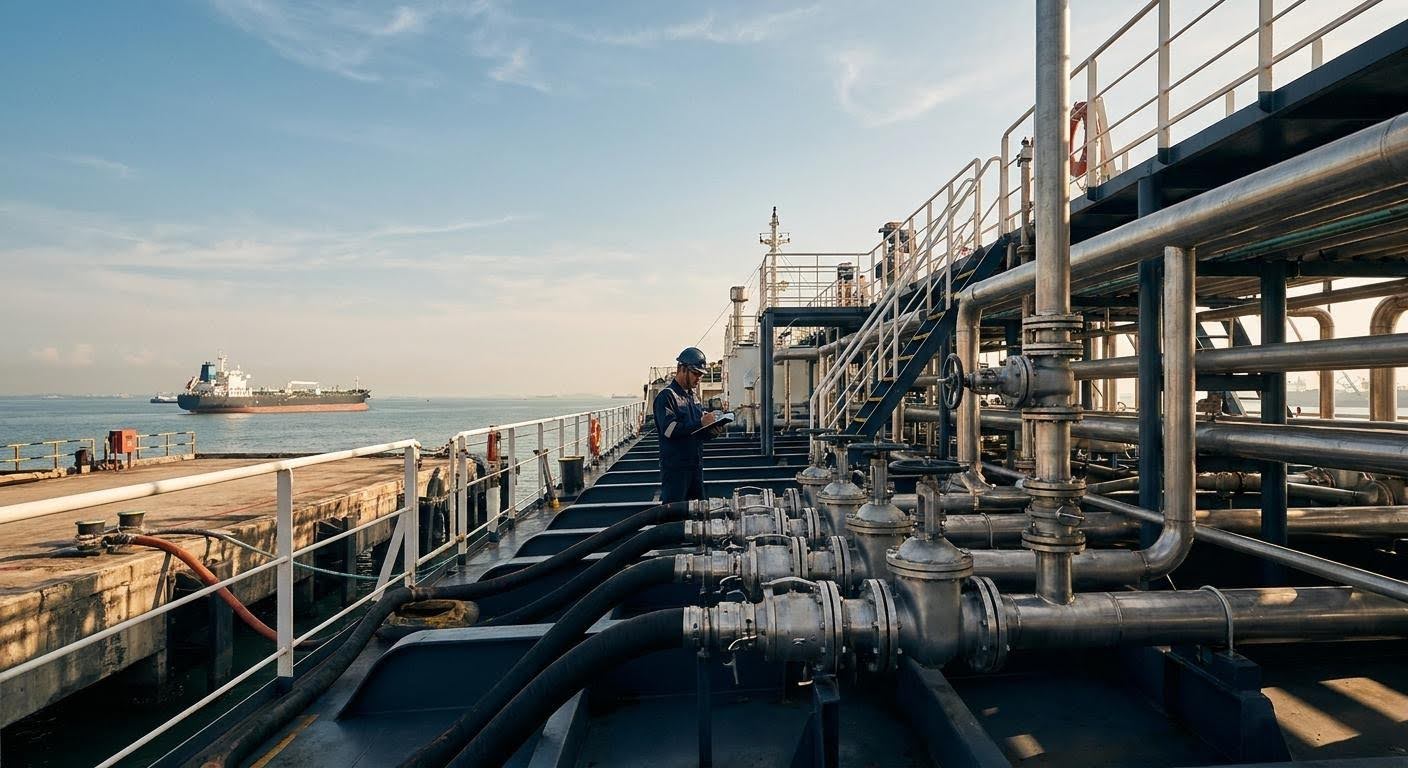
Tanker valuation in Malaysia sits at the intersection of three markets that move very differently. Clean petroleum product tankers respond to refinery throughput and arbitrage windows. Chemical tankers respond to specialty cargo flows out of Pasir Gudang and Kerteh. Bunker tankers respond to Port Klang, Tanjung Pelepas, and the post IMO 2020 sulphur cap fuel mix. Each category demands a different lens before a number is signed off on a valuation report.
This guide sets out how a Malaysian vessel valuer thinks about tanker tonnage. It covers the categories you will see flagged on a hull mortgage instruction, the data sources that anchor the market approach, and the regulatory and classification details that separate a defensible valuation from a guess. The framing follows IVSC International Valuation Standards (IVS) and is consistent with how MacReal International prepares hull and machinery valuations for Malaysian banks, owners, and corporate finance teams.
If you are new to the broader topic, start with our pillar overview on vessel valuation in Malaysia. For dry tonnage, see bulk carrier valuation and container ship valuation on this site.
Tanker Categories That Matter for Malaysian Valuations
The tanker fleet calling Malaysian ports is not one homogenous market. A clean line valuation must first sort the asset into the right category, because each one trades at different earnings multiples and against a different comparable pool.
Product tankers (MR and LR). Medium Range (MR) tankers around 45,000 to 55,000 DWT are the workhorses of the regional clean petroleum products trade. They lift gasoline, gasoil, and jet fuel between regional refineries and discharge ports. Long Range (LR1 and LR2) units sit at roughly 75,000 and 115,000 DWT and bridge AG to Far East and intra Asia naphtha and diesel flows. For a Malaysian instruction, MRs are by far the most common product tanker presented for valuation, often Japanese or Korean built and on time charter to Petronas Trading, regional traders, or bunker majors.
Chemical tankers. These split into IMO Type 1, Type 2, and Type 3 depending on the hazard class of cargoes the ship is certified to carry. IMO 1 is the most stringent and the rarest, built for the most dangerous cargoes. IMO 2 stainless steel parcel tankers carry the bulk of specialty chemical trade in and out of Malaysia, including methanol, MEG, and palm oil derivatives. IMO 3 is used for less hazardous products and for many vegetable oil flows. Stainless steel content drives both newbuild cost and resale value, so identifying coating type and tank metallurgy is non negotiable for chemical tanker valuation.
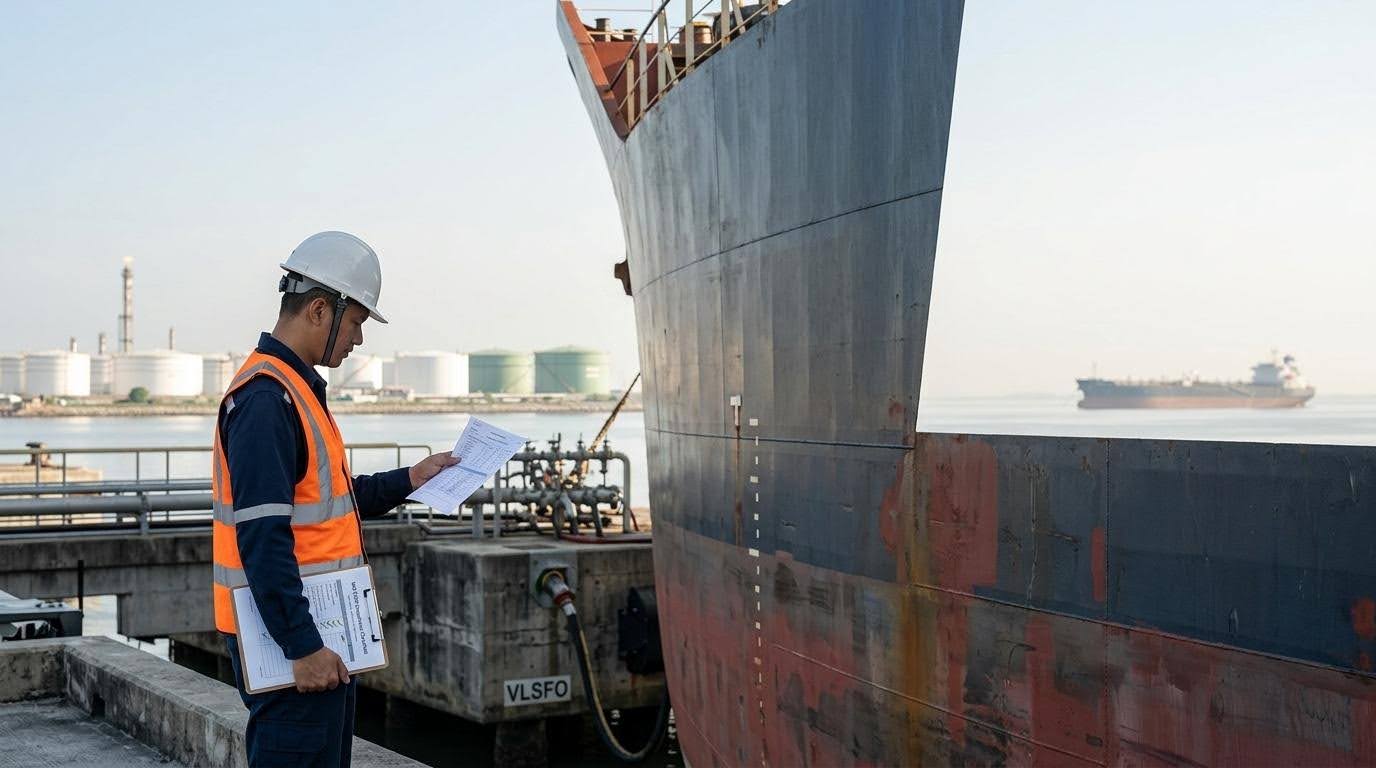
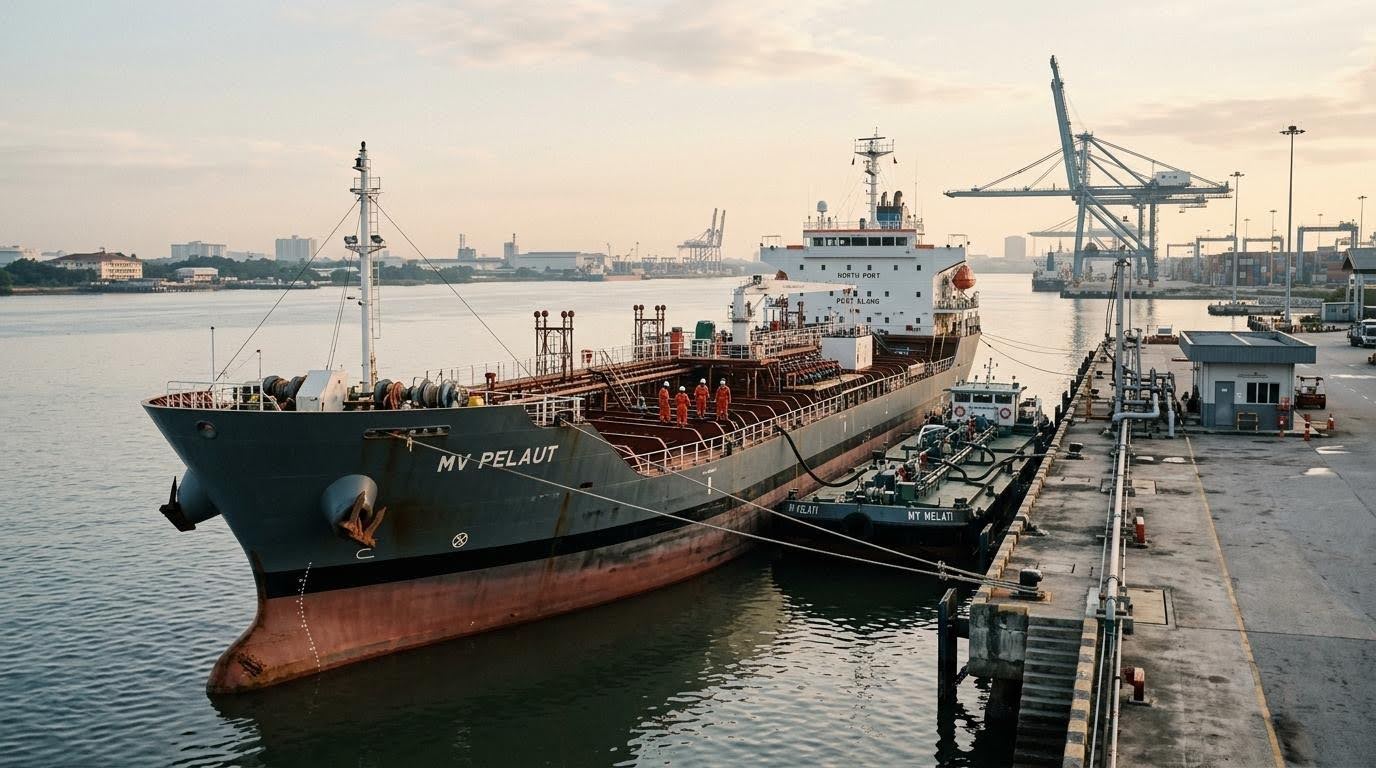
Bunker tankers. Bunker barges and self propelled bunker tankers serve the supply market at Port Klang, Pasir Gudang, and Tanjung Pelepas. They typically sit in the 1,500 to 8,000 DWT range. Demand is driven by transhipment volumes and by the bunkering choice between very low sulphur fuel oil (VLSFO), high sulphur fuel oil (HSFO) for scrubber fitted ships, and marine gasoil (MGO). Petronas Trading and the licensed bunker suppliers anchor this market.
Coastal tankers. Coastal tankers under 5,000 DWT serve domestic distribution between Peninsular Malaysia, Sabah, and Sarawak. Many are flagged Malaysian and registered with the Marine Department Malaysia. Comparable evidence here is thinner than the international market, and the valuer often relies on domestic sale records and replacement cost cross checks.
DWT, Age, and the Tanker Value Curve
Deadweight tonnage and age remain the two strongest single predictors of tanker value, but the curve is sharper than for dry bulk. A tanker has more specialised steel, more cargo system complexity, and a stricter regulatory inspection regime, so each year off the build date erodes value faster.
For an MR product tanker, a clean indicative pattern looks like this. A five year old unit trades at a meaningful discount to newbuild parity. By ten years the unit has typically completed two special surveys and the discount widens. Beyond fifteen years the trading window narrows, charterer vetting becomes a binding constraint, and value approaches scrap parity faster than the steel weight alone would suggest.
Chemical tankers age differently. A well maintained stainless steel IMO 2 with documented tank cleaning history can hold value better than a comparable product tanker because the replacement cost of the cargo system is so high. Coating renewals on epoxy coated chemical tankers are the dominant capex item and the valuer must check the last and next coating survey before settling on a market value.
Bunker tankers depreciate on a flatter curve in the early years and then drop sharply once the unit can no longer comply with port specific emission and double hull rules. The Marine Department Malaysia and port authority requirements at Port Klang and Tanjung Pelepas effectively cap the trading life of older single skin units in the bunker trade.
Double Hull and IMO 2020 Sulphur Compliance
Two regulatory items dominate the modern tanker valuation discussion in Malaysia.
Double hull. MARPOL Annex I phased out single hull oil tankers a decade ago, and IACS classification societies will not class a non compliant unit for international oil trades. For Malaysian instructions on bunker barges and small coastal product tankers, the valuer must confirm hull configuration on the class certificate. A single skin bunker barge has a materially different value than a comparable double hull unit because the addressable market and insurer appetite are restricted.
IMO 2020 sulphur cap. Since 1 January 2020 the global cap on marine fuel sulphur content has been 0.50 percent m/m, with a 0.10 percent cap inside Emission Control Areas. For tanker owners this matters in two ways. First, ships without scrubbers must burn VLSFO or MGO, which has shifted bunker tanker fleet mix at Port Klang and Tanjung Pelepas towards segregated VLSFO capable units. Second, scrubber fitted product tankers carry an additional capital item that the valuer must price separately, including the open or closed loop configuration and the wash water discharge restrictions in Malaysian waters.
A tanker valuation that does not address hull configuration and post 2020 fuel compliance is incomplete. MacReal explicitly cross checks both before issuing a hull valuation report.
Classification Society Survey Status
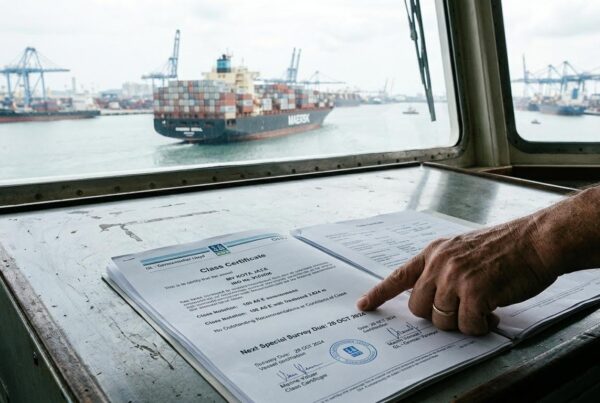
A tanker is only as good as its class certificate. The IACS member societies most often seen on Malaysian instructions are ClassNK, Lloyd’s Register, DNV, ABS, and Bureau Veritas. The valuer must review:
- Date of last special survey (SS) and next due
- Date of last intermediate survey (IS) and next due
- Last drydocking and condition of bottom plating
- Status of any outstanding conditions of class or memoranda
- For chemical tankers, the IMO Certificate of Fitness and the list of permitted cargoes
- For oil tankers, the Condition Assessment Programme (CAP) rating where applicable, particularly for units over 15 years
A unit that is one month away from a heavy special survey trades at a different value than the same hull a month after a clean survey. The valuer should adjust for this either through a deduction or by stating the valuation is on a basis of survey status as inspected.
Market Approach Data Sources
The market approach is the dominant method for tanker valuation under IVS. Cost approach and income approach (DCF on time charter equivalents) act as cross checks. The data anchors are:
- Clarksons Research for Sale and Purchase reports, weekly fixture lists, secondhand price assessments, and newbuilding price series
- VesselsValue for live fleet level valuation models, beneficial ownership data, and historical sale comparables
- ICAP Shipping for tanker S&P broker reports and indicative values
- Baltic Exchange for time charter equivalent earnings on the BCTI clean tanker indices
- Drewry and MSI for chemical tanker and product tanker market outlooks
- Marine Department Malaysia records for the Malaysian flagged fleet
For a defensible Malaysian valuation the file should hold at least three to five comparable transactions, age and DWT adjusted, with the source identified and the date of the deal noted. For chemical tankers the comparable pool is global, not just regional, because the parcel trade is internationally priced.
The valuer also documents the comparable selection logic. A 2015 built MR tanker on a five year time charter to a major oil trader is not a clean comp for a spot trading 2015 built MR with no employment cover. Earnings visibility carries a premium and a hull mortgage valuation must state the basis on which the comparable was adjusted.
Malaysian Bunker Barge Fleet Context
The Malaysian bunker market is structurally important. Tanjung Pelepas and Port Klang Westport are major transhipment hubs and Pasir Gudang serves as a regional bunkering anchor. The licensed bunker suppliers operate a mixed fleet of self propelled bunker tankers and dumb barges, and Petronas Trading remains the dominant supplier of physical product into the market.
For valuation, the practical points are these:
- Bunker barge values are tightly linked to the local supplier licence framework. A unit without a contract with a licensed supplier has materially less utility
- Mass flow meter (MFM) fitted units command a premium because the Maritime and Port Authority frameworks across the Singapore Strait region effectively require certified MFM bunkering
- The Malaysian Maritime Enforcement Agency (MMEA) actively patrols against illegal bunkering. Vessels with incident history or lapsed permits suffer a value penalty that the valuer should reflect
- Dual segregation between VLSFO and HSFO is now table stakes for any unit serving the deepsea fleet at Tanjung Pelepas
The valuer who understands the licence and compliance overlay will produce a more defensible bunker tanker valuation than one who anchors only to international S&P comparables.
Scrapping Value Floor
Every tanker valuation has a floor set by demolition value. The Indian subcontinent yards, primarily Alang in India, Chittagong in Bangladesh, and Gadani in Pakistan, set the global benchmark per LDT (light displacement tonnage). Recent demolition prices for tanker tonnage have ranged in a wide band depending on the steel cycle, but for valuation purposes the LDT figure on the class certificate multiplied by a current per LDT assessment from Clarksons or GMS gives a defensible floor.
For Malaysian flagged units the practical complication is that delivery to a South Asian yard requires Hong Kong Convention or EU Ship Recycling Regulation considerations depending on the buyer, and Malaysian owners increasingly use cash buyers who handle the logistics. The valuer should state demolition value as an “as is, where is” figure unless the instruction asks for a delivered price.
For older bunker barges and coastal tankers, demolition value can be a binding constraint on the valuation, particularly if the trading market has thinned out. In that case the cost to deliver the unit to a recycling yard, the cleaning costs, and the gas free certificate process need to be netted against the gross steel value.
Mortgage Default and Recovery Reality
Banks are the largest single user of tanker valuations in Malaysia. The valuation supports loan to value tests at origination, covenant testing during the life of the loan, and recovery analysis on default. The discipline that separates a market value from a recovery value is timing.
A market value under IVS assumes a willing buyer and willing seller in an arm’s length transaction with adequate marketing. A forced sale value compresses the marketing period and almost always sits below market value. For a tanker, the forced sale discount widens with vessel age, with cargo system specialisation, and with thin trading conditions in that subsegment.
For a chemical tanker with specialised stainless steel coatings, the buyer pool is narrow and a forced sale can take months. For an MR product tanker in a strong market, the discount narrows because liquidity is high. The valuer should state both market value and an indicative forced sale value where the instruction calls for it, and should be explicit about the assumed marketing period.
The valuer should also flag any encumbrances visible in the Malaysian Ship Registry under the Merchant Shipping Ordinance 1952 framework, and should note any preferred maritime liens that would rank ahead of the mortgagee in a default scenario.
Conclusion: A Defensible Tanker Valuation in Malaysia
Tanker valuation is not a one number exercise. It is a documented argument that connects the right comparable pool to the right unit, after adjusting for age, DWT, hull configuration, classification status, IMO 2020 fuel compliance, and Malaysian regulatory overlay. Done well, it gives banks, owners, and buyers a defensible basis for a transaction. Done poorly, it produces a number that does not survive cross examination.
MacReal International prepares tanker valuations for Malaysian banks, shipowners, and corporate finance teams across product, chemical, bunker, and coastal categories. Our reports follow IVSC IVS and are written for credit committee scrutiny, not for marketing.
If you have a tanker valuation instruction or want to discuss methodology before a hull mortgage drawdown, contact MacReal International. Start with our pillar guide on vessel valuation in Malaysia, and explore the dry tonnage companions on bulk carrier valuation and container ship valuation.