How Much Does Vessel Valuation Cost in Malaysia
Vessel valuation cost in Malaysia is rarely a single number. The fee a shipowner pays for a small harbour craft used for hire purchase financing looks nothing like the fee a Labuan-registered offshore operator pays for an Anchor Handling Tug Supply (AHTS) report covering charter income, drydocking history, and classification status. The same valuer can quote one engagement at four figures and another at five figures, and both quotes are defensible.
This article sets out how vessel valuation fees are structured in the Malaysian market, the cost drivers that move a quote up or down, and the quoting process MacReal uses for shipowners, banks, insurers, and lawyers. The aim is to help you scope a fee budget before you call a valuer, and to understand which trade-offs between cost and report depth are worth making for your specific use case.
If you are scoping a vessel valuation engagement against a marine mortgage drawdown, an MFRS impairment review, a pre-sale negotiation, or a court matter, the fee is one input. The bigger question is whether the report will hold up in front of the bank credit committee, the insurer’s underwriter, the auditor, or the judge. A cheap report that does not hold up costs more than a properly scoped engagement.
Who Commissions Vessel Valuations and Who Pays
In the Malaysian market, vessel valuations are typically commissioned by one of five parties. Each party has a different reason for needing the report, and the fee burden falls in predictable places.
Shipowners commission valuations when arranging marine mortgage financing, refinancing an existing facility, preparing for a sale, settling a partnership dispute, or supporting an insurance reinstatement claim. The shipowner pays the fee directly in most cases.
Banks and Labuan-licensed financial institutions instruct independent valuers when underwriting marine mortgage facilities under the Merchant Shipping Ordinance 1952 or the Labuan registry equivalent. The bank often passes the fee to the borrower as a financing condition.
Auditors commission valuations as expert input for MFRS 13 fair value reporting, MFRS 36 impairment testing, or MFRS 3 purchase price allocation work where vessels sit on the balance sheet. The audit client carries the fee.
Marine insurers and brokers request valuations for setting sums insured, validating reinstatement claims, or arbitrating total loss settlements. The insured typically pays.
Lawyers and the Admiralty Court instruct valuations for vessel arrest, mortgage default sales, partnership disputes, and matrimonial proceedings. Fees are normally billed to the instructing solicitor and recovered from the appropriate party at settlement.
In all five cases, the deliverable is broadly the same: a written report compliant with International Valuation Standards Council (IVSC) standards, signed by an accredited valuer, with stated assumptions, methodology, and a defensible value conclusion. The fee differences come from the scope of inspection, the depth of analysis, and the complexity of the asset.
Fee Bands by Vessel Type and Engagement Complexity
Malaysian vessel valuation fees fall into rough bands. The actual quote depends on the cost drivers covered in the next section, but these bands give a starting reference point.
Small Craft and Harbour Vessels
This band covers fishing boats, small tugs, harbour craft, supply launches, dive boats, and pleasure craft below typical commercial fleet size. Reports are usually desktop or limited-inspection, the comparables base is shallow, and the use case is most often hire purchase financing, partnership settlement, or insurance reinstatement.
Mid-Size Offshore and Coastal Vessels
This is where the bulk of Malaysian shipowner demand sits. AHTS, Platform Supply Vessels (PSV), Offshore Support Vessels (OSV), workboats, mid-size product tankers, bunker tankers, and chemical carriers operating regional trades all fall into this band. Reports almost always require an on-board condition inspection, drydocking and classification record review, and where applicable, charter party analysis.
Deep-Sea Cargo and Specialised Tonnage
Deep-sea bulk carriers, container vessels, large product or chemical tankers, and specialised tonnage such as accommodation barges and pipelay support vessels sit in the higher band. Reports require multi-jurisdictional document review (flag state, classification society, port state control history), more comparables work using sources such as Clarksons Research and VesselsValue, and detailed charter income analysis where the vessel is on time charter or bareboat charter.
Fleet Portfolio Engagements
Where a shipowner or bank requires a portfolio valuation across multiple vessels, fees typically scale sub-linearly with the number of vessels. Per-vessel cost falls because methodology, market analysis, and template work amortise across the portfolio. Fleet engagements of five vessels or more usually attract a portfolio discount on the per-vessel base fee.
For an indicative quote tailored to a specific engagement, contact MacReal directly. Published bands without scoping detail can mislead and we prefer to quote against a defined scope.
What Drives the Fee
Six factors do most of the work in moving a vessel valuation quote up or down.
Vessel type and complexity. A standard harbour tug values faster than an AHTS with a Bollard Pull (BP) above 150 tonnes, dynamic positioning class DP2 or DP3, and a complex deck-equipment fit-out. The AHTS report must cover deck space, fuel oil capacity, dry bulk capacity, accommodation berths, BHP and BP figures, and DP class. The harbour tug report does not.
Fleet size. Single-vessel engagements carry the full fixed cost of methodology setup, market analysis, and report writing. Fleet engagements amortise these costs across multiple assets.
Drydocking and survey review. Where the bank, auditor, or court requires the valuer to verify drydocking status, classification special survey records, intermediate survey records, and continuous survey machinery records, the engagement scope expands. Document review and reconciliation against classification society records (Lloyd’s Register, ABS, DNV, Bureau Veritas, Indian Register of Shipping, Nippon Kaiji Kyokai) takes meaningful effort.
Multi-jurisdictional documents. A Labuan-registered vessel chartered to a Petronas-affiliated operator and mortgaged to a Singapore bank carries documents across three jurisdictions. Each adds verification effort and report scope.
Charter income analysis. Where the vessel is on time charter, bareboat charter, or contract of affreightment, an income approach analysis becomes either appropriate or required by the instructing party. The valuer must review the charter party, model the cash flow over the remaining tenor, and apply the appropriate discount rate. This adds material scope.
Court-evidence overlay. Reports prepared for use as evidence in admiralty, mortgage default, or matrimonial proceedings carry a higher fee because the valuer must prepare to give expert testimony, attend hearings if required, and produce a report that meets the evidential standards of the court.
 Inspection vs Desktop Valuations
Malaysian vessel valuations split broadly into two scopes.
Desktop valuations rely on documentary evidence, photos, drydocking records, classification status, charter party details, and a comparables-based market analysis. They are appropriate for routine renewals, fleet portfolio refresh, indicative pre-bid valuations, and hire purchase top-ups where the bank is comfortable with a documentary scope. Desktop fees sit at the lower end of each band.
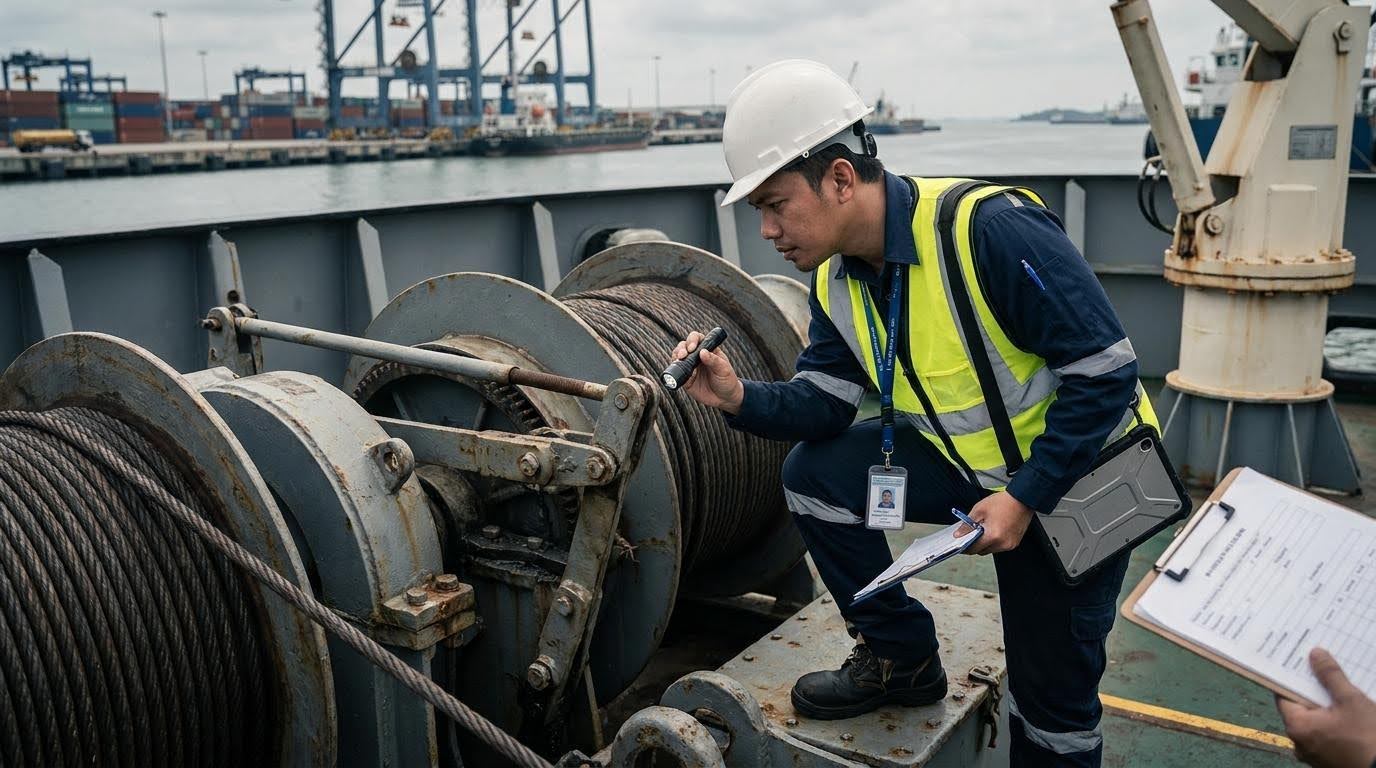
On-board inspection valuations require the valuer to attend the vessel in port, conduct a structured condition survey, photograph machinery and structural items, review on-board records, and reconcile the condition assessment against documentary evidence. They are required for marine mortgage initial drawdowns at most Malaysian and Labuan banks, MFRS impairment reviews where the vessel has had a material event (collision, grounding, fire, machinery failure), and any court matter. Inspection fees sit at the higher end of each band, and the inspection itself adds time and travel cost.
The inspection decision is rarely the valuer’s call alone. The instructing party (bank credit committee, auditor, court) usually specifies the scope as part of the engagement letter.
MacReal’s Quoting Process
MacReal’s vessel valuation engagements follow a structured intake to keep the fee proportionate to the scope.
Step one: scoping call. A 20-minute call with the shipowner, banker, or instructing lawyer to capture vessel particulars (type, IMO number, year built, BHP or DWT, classification society, current charter status), the use case (mortgage, MFRS, M&A, court), the deliverable required (single vessel, fleet, indicative or formal report), and the timeline.
Step two: information request. A document checklist covering vessel registry, classification certificates, drydocking records, charter party, recent surveyor reports, ownership chain, and any insurance or reinstatement records.
Step three: fee quotation. A written quote within one business day setting out scope, methodology, deliverable format, fee, expected delivery date, and inspection arrangements where applicable.
Step four: engagement letter and kickoff. Signed engagement letter, fee deposit invoiced, kickoff meeting with the client team.
Step five: delivery and review. Draft report delivered, client review window, finalisation, and signed final report. Where the report supports a bank credit committee submission, MacReal can attend the credit committee Q&A on request.
This structure is designed to avoid the most common Malaysian market problem: a vessel valuation quoted on a thin scope that fails the bank credit committee’s scrutiny and requires re-work.
Common Pitfalls of Cheap Vessel Valuations
The cheapest quote is rarely the best value in vessel valuation. Five pitfalls recur in the Malaysian market.
Stale comparables. A report that relies on comparables more than 12 months old, or that ignores the post-2014 oil-price reset and the 2020 demand recovery on offshore tonnage, will misprice the vessel. Bank credit committees catch this immediately.
Missing classification verification. A report that does not verify the vessel’s current classification status, drydocking due dates, and outstanding conditions of class with the classification society leaves the bank exposed. If classification has been suspended or withdrawn, the value falls materially.
Charter assumptions that cannot be justified. A report that values a chartered vessel using the income approach without a defensible discount rate, charter renewal probability, and counterparty credit assessment is open to challenge.
Methodology disclosure gaps. IVSC standards require the valuer to disclose the methodology, key assumptions, and reasoning. A report that states a value without showing the workings will not survive auditor scrutiny in MFRS 13 or MFRS 36 contexts.
No inspection where one was required. A desktop report submitted where the use case required an inspection is the most expensive mistake. The bank or auditor will reject the report and the engagement runs again, doubling the fee and adding weeks to the timeline.
A properly scoped first engagement, even if the fee is higher than the cheapest comparable quote, almost always costs less in total than a re-work cycle.
Related Reading
For more context on vessel valuation in the Malaysian market, see MacReal’s pillar guide on vessel valuation in Malaysia, the guide to what’s inside a vessel valuation report, and the checklist for choosing a vessel valuer in Malaysia. For specific use cases, see vessel valuation for marine mortgage (Link) and bank financing and vessel valuation for marine insurance (Link).
Get a Fee Quotation for Your Vessel
If you have a specific vessel or fleet to value and need a written quotation, contact MacReal International. The intake call takes 20 minutes and the written fee quotation lands within one business day. MacReal’s vessel practice covers Labuan IBFC, Kemaman, Port Klang, Bintulu, and Lumut, with capability across AHTS, OSV, tugboats, tankers, bulk carriers, container vessels, fishing trawlers, barges, and yachts.