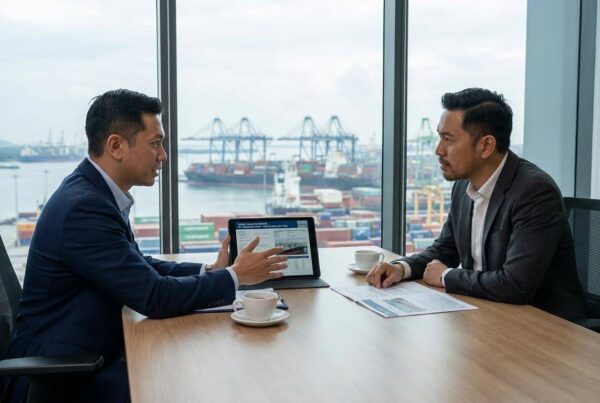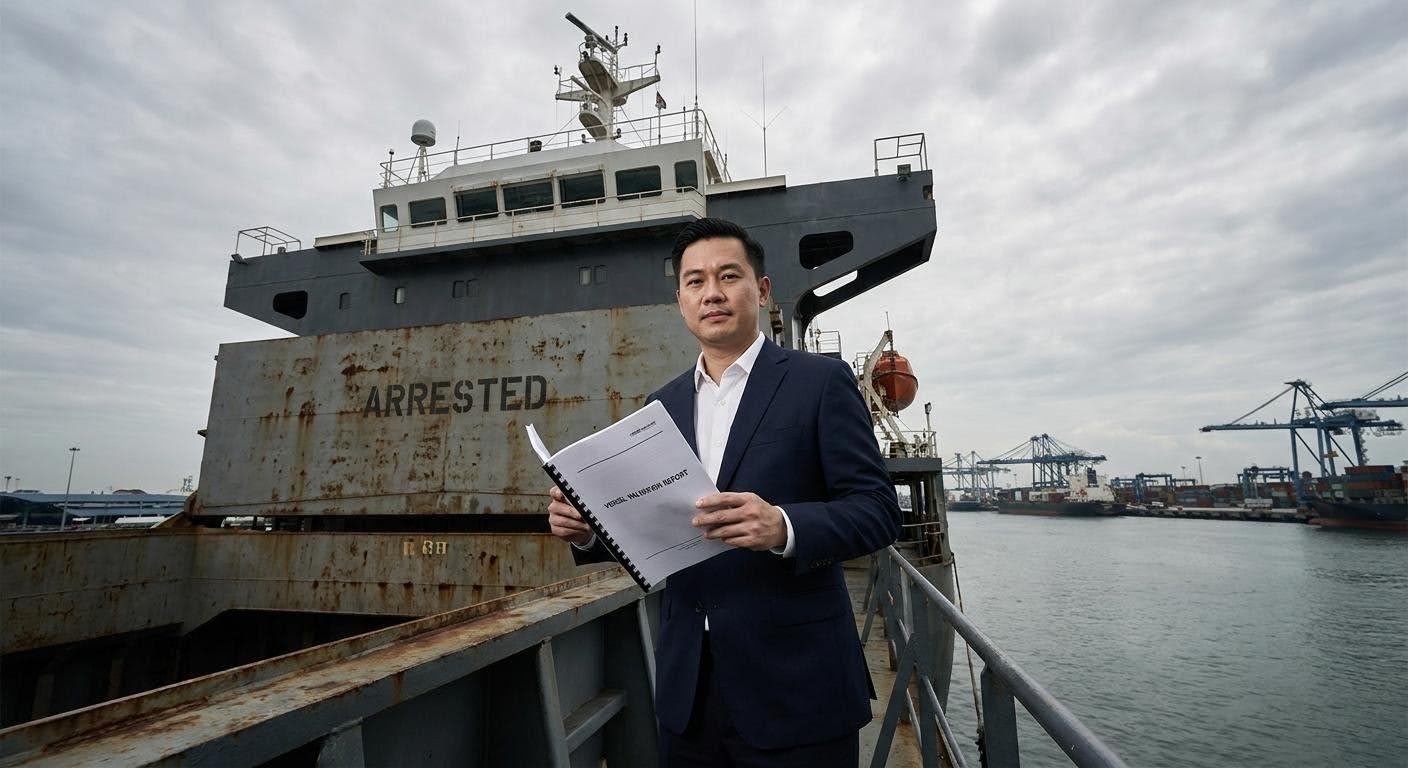
Admiralty valuation Malaysia engagements arise when a maritime dispute reaches the point where a court or arbitral tribunal needs an independent figure for the vessel.
The figure does more than answer a factual question about what a ship is worth. In collision damage claims, it sets the ceiling for repair costs versus total loss. In charterer disputes, it anchors the compensation for lost trading capacity. In hull insurance disputes, it determines whether the insurer pays out a total loss or a partial loss with repair obligations. In shareholder and partnership dissolution proceedings, it becomes a core input to the equitable division of maritime assets.
This article is written for the instructing solicitor, in-house counsel, and arbitrator who needs to understand what a competent vessel valuation expert must produce in vessel valuation in Malaysia proceedings. A report built to financing standards may still be torn apart in cross-examination if it was not built to litigation standards from the outset.
Types of Disputes That Require Vessel Valuation
Maritime disputes in Malaysia that require independent vessel valuation fall into six broad categories. Each category carries a distinct valuation question, and the instructing solicitor must brief the expert on which question the tribunal actually needs answered.
Collision damage claims. Where one vessel damages another, the claim typically proceeds in the Admiralty Division of the High Court of Malaya under the Courts of Judicature Act 1964, applying the Collision Regulations (COLREGS). The valuation question is the diminution in value caused by the collision, or whether the repair cost exceeds the post-repair value of the vessel. Where the repair cost approaches the repaired value, the constructive total loss analysis becomes the central issue.
Charterer disputes. A voyage or time charter that is repudiated or terminated for breach can leave the shipowner claiming for lost charter income over the remaining period or for diminution in market value arising from an unlawful return of the vessel in damaged condition. The valuer must understand the charter structure, the vessel’s trading profile, and the comparable tonnage market.
Total loss claims under hull and machinery insurance. Where an insurer disputes whether a casualty is an actual or constructive total loss, the dispute turns on whether the vessel’s repaired value exceeds the cost of repairs. Malaysian hull policies follow English marine insurance practice under the Marine Insurance Act 1906, applied in Malaysia through the Civil Law Act 1956. The expert provides both a pre-casualty market value and a post-repair market value.
Hull insurance disputes over insured value. Where an insurer challenges an agreed or insured value as overstated at policy placement, the expert must reconstruct the market value of the vessel at a past date using historical S&P transaction data and market conditions as they existed at the relevant time.
Shareholder disputes over a shipping company. Where shareholders in a vessel-owning company dispute the company’s value, the underlying vessel or fleet value is typically the primary driver. The vessel valuation feeds directly into the shareholder dispute valuation of the company. The standard of value may be fair value under the Companies Act 2016 rather than open market value, and the expert must be clear on which standard the court has directed.
Partnership dissolution. Where a shipping joint venture dissolves and the partners cannot agree on vessel asset division, the court or arbitrator requires an independent market value to determine the buyout price. The valuation should address both orderly-sale value and forced-sale value to give the tribunal the range within which a fair resolution sits.
Court-Appointed vs Party-Appointed Expert
Malaysian courts and arbitral tribunals use two different frameworks for expert evidence in vessel valuation disputes, and the choice has practical consequences for how the report is structured and how the expert must conduct themselves.
Order 40: Court-Appointed Expert. Under Order 40 of the Rules of Court 2012, the court may appoint an independent expert to report on any question requiring specialised knowledge. A court-appointed vessel valuation expert owes their primary duty to the court, not to any party. The expert’s terms of reference are set by the court, and their fees are costs in the cause. The expert must declare independence from all parties at the outset.
Order 40A: Party-Appointed Expert. Under Order 40A of the Rules of Court 2012, each party may appoint its own expert. The party-appointed expert owes a duty to assist the court and must not act as an advocate. Order 40A requires the expert to acknowledge the overriding duty to the court in their report. Where parties appoint competing experts, the court typically orders a without-prejudice meeting to narrow issues and produce a joint statement identifying agreed findings and the precise scope of disagreement. Malaysian courts may disallow expert evidence or costs where an expert has acted as an advocate rather than an independent opinion provider.
AIAC Maritime Arbitration. The Asian International Arbitration Centre (AIAC) administers maritime arbitration in Malaysia under the AIAC Arbitration Rules and the AIAC Maritime Arbitration Rules. Parties ordinarily appoint their own experts, subject to the tribunal’s power to direct a tribunal expert under Article 29 of the AIAC Arbitration Rules. An expert appointed in AIAC proceedings must be prepared to be cross-examined at the hearing to the same standard as in court.
Admiralty Division of the High Court of Malaya. Admiralty actions in Malaysia are commenced in the Admiralty Division of the High Court of Malaya under the Courts of Judicature Act 1964 and the High Court (Admiralty Jurisdiction) Act 1978. The vessel may be arrested in rem and sold by court order through the Admiralty Marshal. In contested casualty and collision cases, the judge assesses the expert’s methodology and independence when determining which opinion to prefer.
Standards Required of the Expert
A vessel valuation report produced for litigation or arbitration must satisfy a standard that is higher and more explicitly articulated than a report produced for financing or insurance pre-placement. The instructing solicitor should verify that the proposed expert meets all of the following requirements before instruction.
Independence and absence of conflict. Section 45 of the Evidence Act 1950 governs the admissibility of expert opinion in Malaysian proceedings. Expert opinion is admissible where the court requires specialised knowledge and the expert is specially skilled in that field. Independence is not formally required for admissibility, but the weight given to the opinion will be reduced if the expert has a financial or personal relationship with any party. Order 40A requires the party-appointed expert to declare the absence of conflict.
Classification society expertise. Litigation valuers must understand the classification record of the vessel. Class status, outstanding recommendations, condition surveys, and special survey due dates all affect market value. IACS member societies active in Malaysia include Lloyd’s Register, Bureau Veritas, Nippon Kaisha, and Korean Register. An expert who cannot interpret a class certificate and survey history cannot credibly defend a valuation under cross-examination.
Sale-and-purchase market knowledge. The market approach requires the expert to demonstrate command of the S&P market through knowledge of actual transactions, not indices alone. The expert must identify comparable vessels by type, age, size, class, and flag, adjust for differences, and explain the selection. The International Valuation Standards Council (IVSC) IVS 105 on valuation approaches and methods provides the framework within which a credible Malaysian expert situates their methodology.
Ability to withstand cross-examination. The expert must defend every assumption, adjustment, and conclusion. Undisclosed assumptions will be drawn out by counsel. The expert should disclose the source of every comparable, the basis for every adjustment, and the reason why alternative methodologies were not applied. An expert who relies on “professional judgment” as a substitute for disclosed reasoning will not be preferred by the tribunal.
Valuation Methodology in a Dispute Context
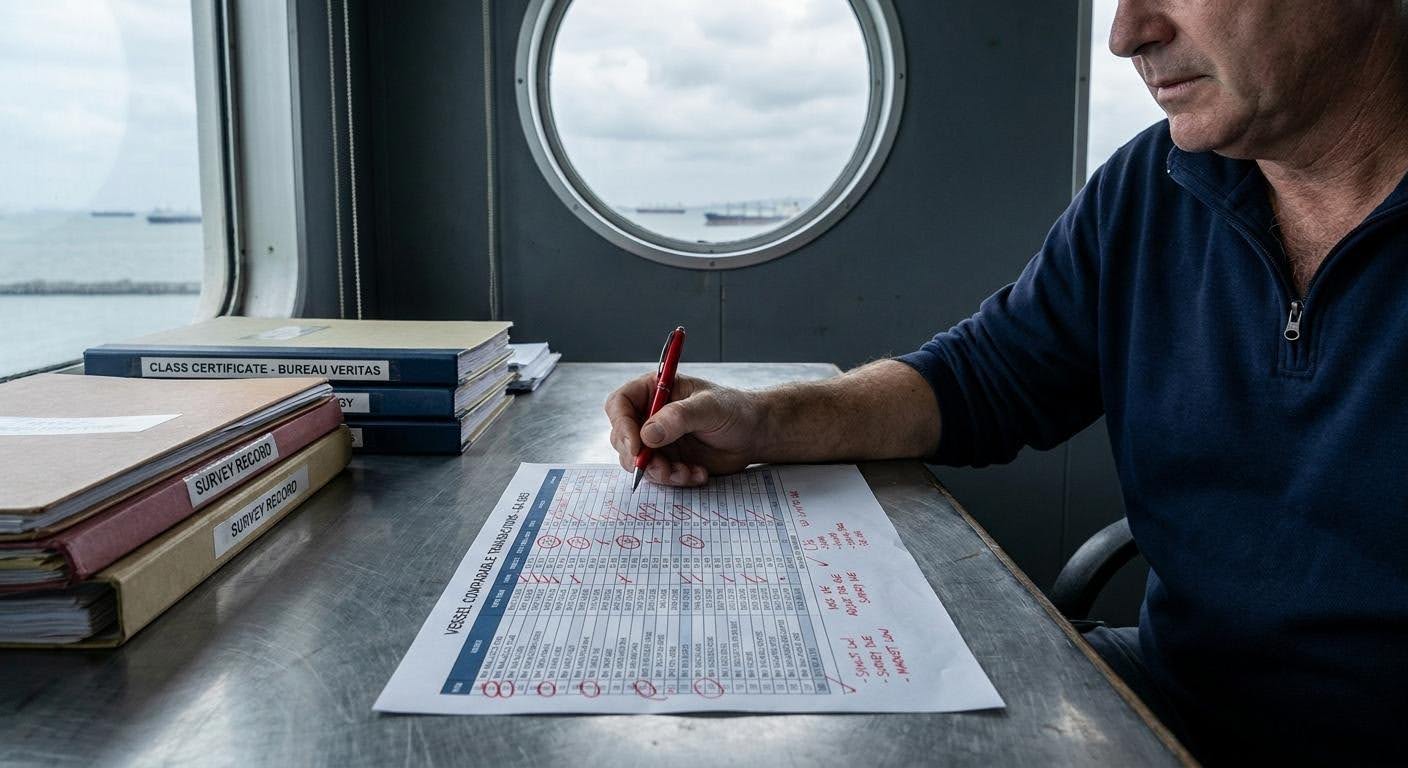
The market approach is the primary methodology in vessel valuation for litigation, consistent with IVSC guidance and the practice of competent ship valuers in the S&P market globally and in Malaysia specifically.
Comparable S&P transactions. The expert identifies sales of comparable vessels within a window around the relevant date, typically twelve to twenty-four months. Comparables are selected by vessel type, deadweight or gross tonnage, year of build, class, flag, and trading area. Each comparable is adjusted for differences, and a concluded value is derived from the adjusted range. The expert must disclose the data source, whether broker circulars, published sale reports, or subscription databases maintained by international S&P brokers.
Orderly vs forced liquidation distinction. In dispute contexts, the tribunal may require both an orderly-sale market value and a forced-sale value. Market value assumes a willing buyer and willing seller with adequate exposure time, consistent with the IVSC definition. Forced sale value assumes a compressed timeframe or a seller under compulsion, and will be lower. The expert must clearly state which basis applies to each figure and must not conflate the two.
Constructive total loss threshold. In hull insurance disputes and collision total loss claims, the expert assesses whether the vessel has become a constructive total loss. Under English marine insurance practice applied in Malaysia through the Civil Law Act 1956, a vessel is a constructive total loss if the cost of repair exceeds the repaired market value. The expert provides a repair cost assessment in collaboration with a marine surveyor and an independent pre-repair market value. Where both are disputed, sensitivity analysis across high, base, and low estimates is required.
Damage-and-repair valuation. Where the vessel is not a total loss, the claim is for the diminution in value caused by the collision. The expert values the vessel before the casualty using contemporaneous S&P data, values it after repair, and determines whether the repair has restored full pre-casualty value. Residual diminution is more likely where structural damage was involved, non-original materials were used in repair, or the casualty history affects future charterability.
Historical date valuations. Where the dispute requires a valuation at a past date, the expert must reconstruct the S&P market as it existed at that date and must not use information that was not available at the relevant time.
Cross-Examination Preparation
The instructing solicitor should work through the following matters with the expert well before the hearing date.
Confirm that every comparable transaction cited in the report is supportable by documentation that can be disclosed in discovery. Comparables sourced from private broker databases may be subject to confidentiality restrictions, and the expert must address how they will substantiate the transaction data in proceedings.
Test the expert’s methodology by asking them to explain, without reference to the report, why each adjustment was made and what the outcome would be if the adjustment were not applied. If the expert cannot articulate the reasoning, the report needs to be strengthened before it is filed.
Where the opposing party has appointed its own expert, review the opposing report for assumptions that differ from those made by the instructing expert and prepare questions that will surface those differences. The AIAC and the High Court both expect the parties’ experts to have identified their areas of disagreement in a joint statement before the hearing.
Verify that the expert has not previously published a market commentary or issued a broker valuation for the same vessel inconsistent with the litigation report opinion. Inconsistent prior statements are a standard line of cross-examination.
Engagement Checklist for the Instructing Solicitor
Before instructing a vessel valuation expert in litigation or arbitration, the solicitor should confirm the following:
- The expert holds relevant qualifications and can produce a signed declaration of independence from all parties.
- The expert has access to current S&P transaction data and can cite the source of every comparable in the report.
- The expert understands the classification record of the subject vessel and can address class conditions and survey history.
- The expert is available for hearing dates and is prepared to give evidence in person under cross-examination.
- The scope of the report is precisely defined: the relevant valuation date, the basis of value required (market value, forced sale value, or both), and the specific questions the tribunal needs answered.
- The report will comply with Order 40A if filed in High Court proceedings, or with the AIAC Arbitration Rules if filed in arbitration.
MacReal International provides independent vessel valuations for litigation and arbitration in Malaysia. Our reports are built to litigation standards from instruction: disclosed methodology, sourced comparables, and an expert prepared for cross-examination. Contact our vessel valuation team with the casualty date, vessel type, and the questions your tribunal needs to answer.
For vessel valuation in debt enforcement contexts, see vessel valuation for mortgage default and auction.